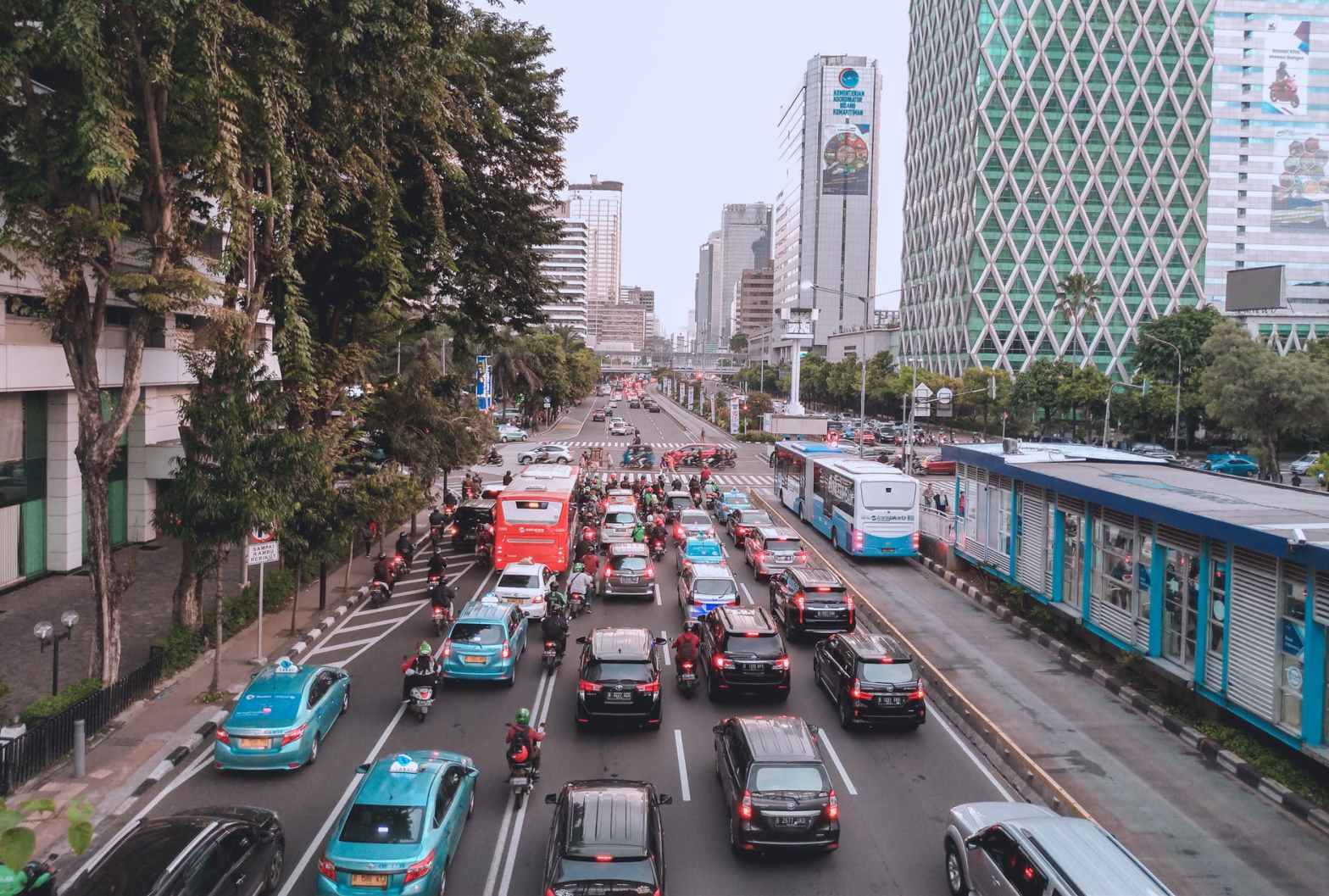
The Indonesia government recently announced a joint initiative with the United Nations Development Programme (UNDP) to adopt the circular economy model for their country. This initiative is expected to bridge the gap between the public and private sector in policy matters and should create new businesses and job opportunities within their economy.
“A Circular economy model is key to achieving zero pollution and a toxic free environment as Indonesia embarks on an industrial and service-based economy in the next decade. The Indonesian Government is pleased to welcome this much-needed initiative which will ease the country’s transition away from a resource-based economy,”
– Mr. Monoarfa, Minister of National Development Planning
The industry sector comprised the largest share in the Indonesia’s GDP, followed by services. Just the industry sector alone made up about 45.7% of their GDP. This workforce is primarily trained to extract raw materials from the primary sector and convert these materials into end-user products. As highlighted by their Minister, Indonesia is currently trying to transit away from a resource-based economy with the circular economy model. Implementing the circular economy will affect this sizeable workforce and they’ll definitely require a smooth transition to even out the ruffles. The transition phases should ideally be designed such that it fits well with their elections periods too.
First of all, the circular economy should be able to bring ecological benefits to their eco-system through preservation of resource, reusing and recycling waste, and converting them into useful products once again. This would reduce the negative ecological impacts to their environment. Secondly, the implementation would be able to create new jobs that might be more sustainable than those involved in raw materials extraction.
An early transition should be beneficial. In the extreme case that Indonesia runs out of natural resources, a part of their workforce would already be trained in the reusing and recycling of waste materials. When it happens, they would be well-positioned to find employment for their young and growing population. Those who are already equipped with the required skills, could serve as anchor points to train and transform the remaining workforce. Job creations should be in the areas of eco-activities, repairs, leasing and used goods.
A successful transition would require close cooperation between the public and the private sector. The key natural resources of Indonesia include silver, coal, fertile soil, natural gas, petroleum, gold, bauxite, tin, copper, timber, and nickel. Plus, it is important to note that the Indonesia is a one of the leading exporters of tin and thermal coal in the world. In addition, we also observe that the mining industry in the country makes up 11.9% of its GDP. This means that the private sector is very entrenched in the industry sector therefore a well-balanced policy must be in place to help its private sector in ironing out the risk. That is a very huge challenge.
I think we could expect the government to work through the banks to incentivise this transition, which might come in the forms of facilitating, lending or subsidising loans to businesses that are seeking to transform their business models, or to those that are creating or incubating startups in the circular and/or social economy.
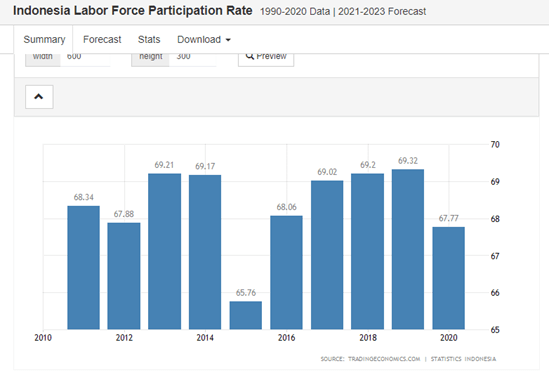
If you observe the above chart, you would observe that the Indonesia government was able to grow their labour force participation rate slightly every year prior to the Covid19 pandemic. It was largely around the same rate and there weren’t much breakthrough. The circular economy model might be able to help the government to achieve new breakthroughs. In the meantime, it is expected that the region would need a lot of assistance in the area of data analytics, engineering, consulting, training, capacity building and technology transfer, in order to move towards their sustainability and economic transformation goals.
Already, the UNDP facilitated a workshop that focused on five areas of circular economy in Indonesia, namely food & beverage, textiles, construction, wholesale and retail trade (plastics) and electronics.

The only productivity tool you’ll ever need!
Don’t you wish you could IMPROVE PRODUCTIVITY and INCREASE COLLABORATION among your staff while doing away with all the hassle? After trying out so many productivity and office tools, I discovered that Google Workspace is the BEST TOOL for both remote and on-site working!

Apart from using the Google Workspace, I want to provide you with even more EXCITING VALUE for your company’s GROWTH and EXPANSION. Today, I am giving out two promotional codes that you could apply and start SAVING MORE MONEY!
| Plans | Promotional Codes |
|---|---|
| Google Workspace Business Starter Plan | EAAY74Q979XD49K |
| Google Workspace Business Standard Plan | YATVPVG39EFFFGW |
Click here to start GROWING NOW!
 Terra Link Research