
Thailand would promote and support the development of digital innovation and related technology in order to propel their economy towards digital transformation. This digital journey is expected to create new jobs for its current and upcoming workforce. Seems like a good idea that new jobs will be created but the transformation could cause an imbalance within the job market, siphoning workforce away from the agriculture sector to the digital sector. If that happens, can Thailand 4.0 still remains as one of the major exporters in the rice market?
Its rice exports in 2014 amounted to 1.3 percent of their GDP. Agricultural production as a whole accounts for an estimated 9% to 10.5% of their GDP. Other agricultural commodities produced in significant amounts include fish and fishery products, tapioca, rubber, grain, and sugar. Exports of industrially processed foods such as canned tuna, pineapples, and frozen shrimp are on the rise. I am not exaggerating when I say that this is a very important industry for Thailand.
As of now, almost 40% of the population work in agriculture-related jobs but this figure is expected to decrease as the country races towards the digital future. Its natural for this figure to decrease.
Why?
Ok, Thailand has already started to equip the Thais with relevant digital skills, together with substantial investments in the digital sector. Both supply and demand pairs up to compel a natural gravitation towards finding work in the digital sector of the economy for work. Apart from this, the younger Thais also get to wear nicer clothes and work in more comfortable settings. Doesn’t sound like an important consideration when choosing a career but this seems to be the case for the younger generation.
Especially for the younger generation.
To make things worse, majority of the younger Thais view the agriculture business as a past relic that is badly in need of modernisation. Apart from this, the country is also experiencing an aging generation and estimates from World Bank has it that by 2040, 42% of Thais will be over 65 years old. So we have the younger Thais abandoning labour-intensive trades for digital work then we also have an aging population that aren’t suitable for manual work too.
At this point, you would think that it is common sense for the agriculture industry to become less labour-intensive and more industrialised. The fact is, many farms are using machinery and it is estimated that almost 90% of the small farms are already harnessing technology.
How can they further improve productivity in the agribusiness?
The way forward is to use UAV, and I believe, to be supported by artificial intelligence and data analytics in the future. UAVs could be expected to perform many functions such as seeding, picking of produces, pest control and many more.
Many of these tasks are back-breaking. Will UAV be able to pick up the slack?
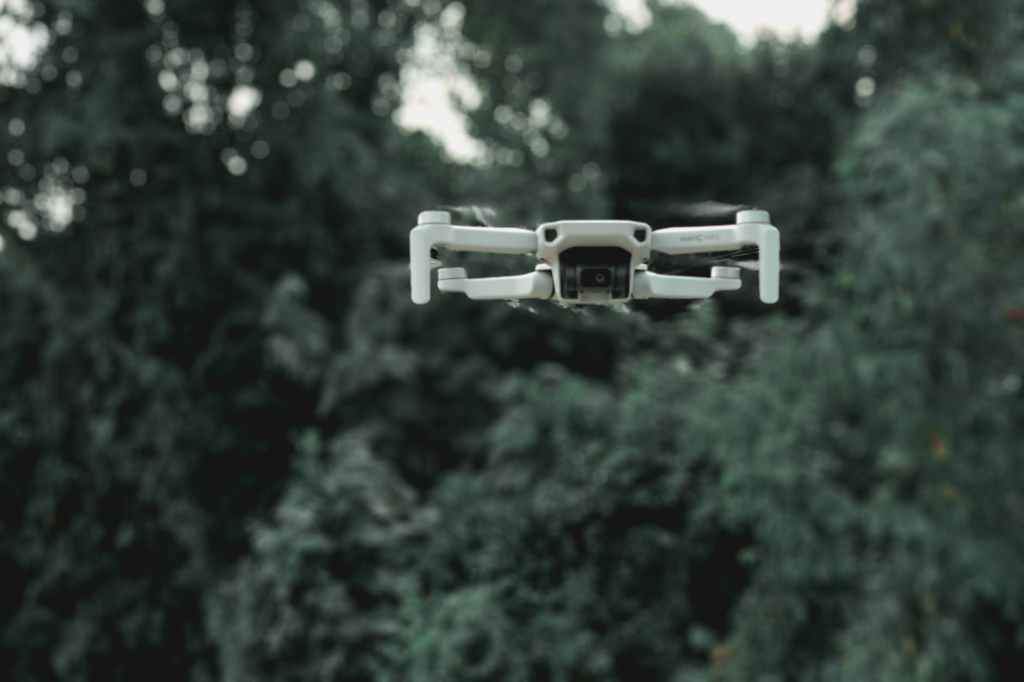
Previously, I thought that UAVs wouldn’t be able to perform these tasks but I have second thoughts after viewing the latest drones from USA. I think the UAV technology is ready for the agriculture business. The new drones are specially fortified and weighted down in order to withstand the strong winds; this is to ensure that the drone’s flight path remains steady and true to its path.
The latest battery technology also allows the drone to cover large tracts of land, which is simply amazing to me, because more charge usually means heavier battery and that translate to issues pertaining to thrust-weight ratios.
Thrust-weight ratio is indicative of the UAV’s performance and it is critical to achieve a fine balance between thrust and weight, in order for the drone to complete its objectives. A heavier drone will definitely consume more battery. Packing a bigger battery usually also means the drone becomes heavier. Its a chicken and egg issue but the latest UAV technology seems to be able to circumvent this issue and achieve good thrust-weight ratio. Once these UAVs completes its objective, it would navigate back to the charging point to recharge its battery and offload its data (in the future, offload the fruits?).
Also, I think that it is definitely possible to wire up the charging stations to harness renewable energy like solar and wind. Double wins.
The potential for utilising drones in the agriculture business is immerse and the private sector have so much to offer. First, they could step in to build the infrastructures necessary for drone training. Second, they could design yearly certification programmes. Third, sales partners could collaborate with the institutes to ensure that the quality of standards for UAV technology. Fourth, they could offer centralised database to aggregate all relevant data which could then be leased out for research purposes. Fifth, the data could be used for policy-making. Sixth, the data could be used as a proxy for research in other sectors.
The possibilities are boundless.

The only productivity tool you’ll ever need!
Don’t you wish you could IMPROVE PRODUCTIVITY and INCREASE COLLABORATION among your staff while doing away with all the hassle? After trying out so many productivity and office tools, I discovered that Google Workspace is the BEST TOOL for both remote and on-site working!

Apart from using the Google Workspace, I want to provide you with even more EXCITING VALUE for your company’s GROWTH and EXPANSION. Today, I am giving out two promotional codes that you could apply and start SAVING MORE MONEY!
| Plans | Promotional Codes |
|---|---|
| Google Workspace Business Starter Plan | EAAY74Q979XD49K |
| Google Workspace Business Standard Plan | YATVPVG39EFFFGW |
Click here to start GROWING NOW!
 Terra Link Research