By 2025, the South Korean government hoped to have up to around 2.8 million electric vehicles (EV) on the road. This most likely would involve the replacement of public transport vehicles such as rental vehicles.
To achieve this, South Korea will need to enhance its charging infrastructure to guarantee that everyone can use their EVs properly. Buildings, both new and old, will soon have to install EV chargers. The government’s objective was to have at least five charging stations to every ten EVs across the entire country.
More than 100 high-speed chargers will be installed at suitable locations so that EV drivers can travel at least 300 kilometres after charging for 20 minutes. For perspective, the driving distance from Seoul to Busan is approximately 325 kilometers.
With this charging station infrastructure plan, the government hoped to provide sufficient charging stations for South Korean EV owners.
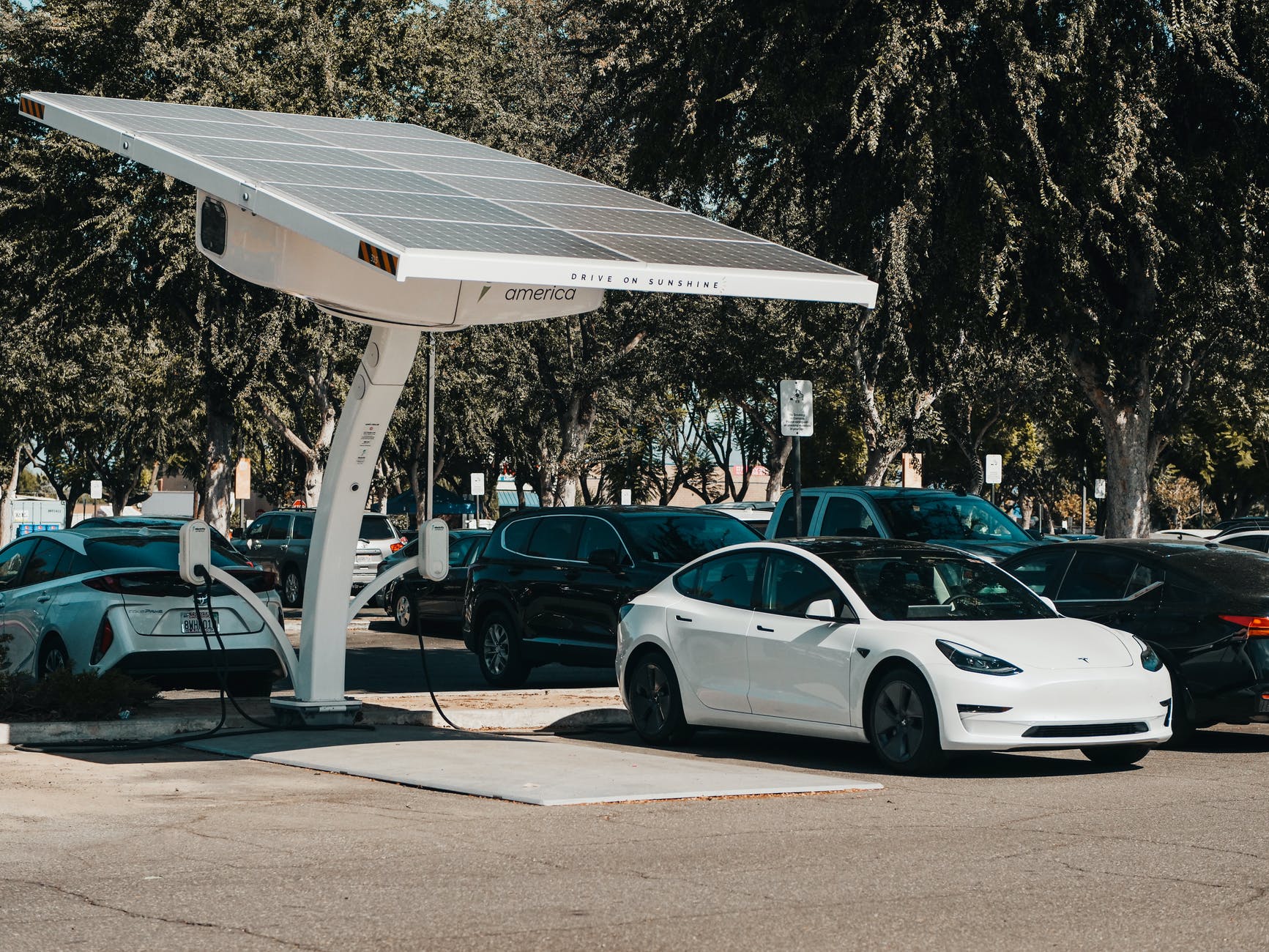
Apart from that, South Korea intended to launch the country’s first car supercharging station that is able to harvest renewable energy from solar panels while charging two EVs at the same time.
The new supercharging station, built on top of an existing gas station facility, operates with 300 kW of fuel cell and 20 kW of solar power, and discharge with 350 kW and 200 kW electric chargers.
Now, EVs can use a variety of charging stations. Level 1 electric chargers are the cheapest of all charging stations today, but they also take the longest to charge EV’s battery. EV owners usually use this type of charger to charge their vehicles overnight.
Level 2 EV chargers can also be used together with solar panels. These chargers provide a range of 15 to 100 kilometres per hour of charging. Level 2 EV chargers can charge a car battery in less than 2 hours.
Level 3 EV chargers, commonly known as DC Fast Chargers with CCS2 or CHAdeMO connections, provide 100+ kilometres of range for EVs in as little as 30-40 minutes of charging.
The new car supercharging station was performing at Level 3 efficiency and the South Korean government intended to scale this model across the country. This initiative was conceived through the sandbox collaboration model promoted by the South Korea government for its private sector.
The top policy makers hoped that the successful launch would proliferate more innovations to improve the country’s charging station network.
 Terra Link Research