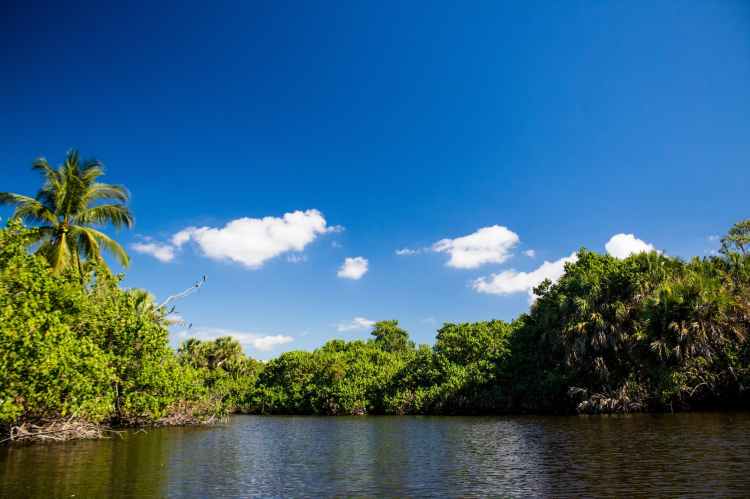
New research shows that coastal ecosystems are a net greenhouse gas sink, making them a powerful ally against increased levels of greenhouse gases. According to a new greenhouse gas budget, coastal ecosystems globally are a net greenhouse gas sink for carbon dioxide (CO2). This is great news, however, emissions of methane (CH4) and nitrous oxide (N2O) counteract some of the CO2 uptake, according to researchers.
Coastal ecosystems such as mangroves, seagrasses, and salt marshes are often overlooked in discussions about conservation and climate change.
However, these ecosystems are incredibly valuable for both their ability to store carbon and their importance for biodiversity.
Research has shown that coastal ecosystems can store up to 10 times more carbon per unit area compared to terrestrial ecosystems. This means that protecting these habitats is an important step in mitigating climate change.
Not only do these ecosystems capture and store carbon, but they also provide a range of other ecosystem services such as shoreline protection, erosion prevention and water quality improvement.
Besides their role in carbon storage, coastal ecosystems are also critical for biodiversity. These habitats function as nurseries for many fish and invertebrate species, which are essential for the ocean’s food web.
On top of this, thanks to their ability to filter pollutants, these ecosystems are home to a diverse range of marine species, making them important for both human and ecological health.
And yet, these essential ecosystems are under threat from climate change, land-use changes, and pollution. Rising sea levels and increasing temperatures due to climate change threaten to inundate these areas, while land-use changes such as urbanization and agriculture continue to destroy and fragment these vital habitats.
Pollution from both point and non-point sources further exacerbates these problems.
It is imperative that we take action to protect our coastal ecosystems. This can include implementing policies that promotes constructive and balanced land-use change, reducing greenhouse gas emissions to mitigate the worst impacts of climate change, and increasing funding for restoration and conservation efforts.
Edited by Zeng Han-Jun
Written by Juliana Rodriguez
 Terra Link Research