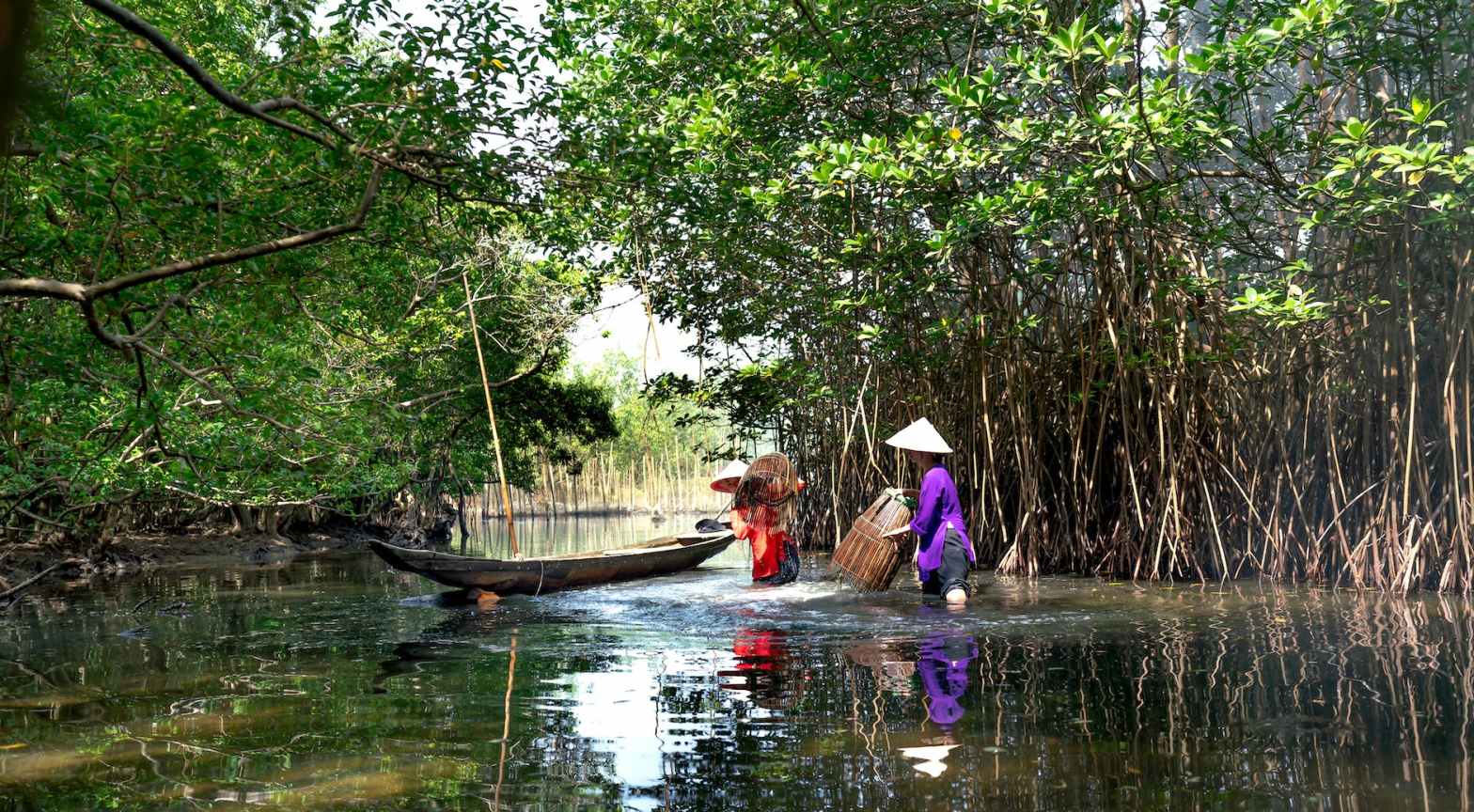
Researchers are proposing a novel pathway through which coastal ecosystem restoration can permanently capture carbon dioxide from the atmosphere.
Seagrass and mangroves — known as blue carbon ecosystems — naturally capture carbon through photosynthesis, which converts carbon dioxide into living tissue.
This process allows these ecosystems to store carbon for centuries, even millennia. In fact, blue carbon ecosystems can store up to 10 times more carbon per hectare than terrestrial forests.
Coastal ecosystems play a crucial role in mitigating climate change because they are effective at absorbing and storing carbon dioxide, one of the main drivers of global warming.
Unfortunately, these ecosystems are being degraded at an alarming rate, which leads to the release of carbon into the atmosphere.
However, by restoring degraded coastal ecosystems, we can not only help to mitigate climate change, but also provide a range of other benefits, such as protecting shorelines from erosion, boosting fish populations, and providing livelihoods for local communities.
The intangible benefits, such as increased biodiversity and recreational opportunities, are also important to consider.
Mangroves and seagrass beds are particularly effective at carbon sequestration. Mangroves are able to store an average of 1,000 tonnes of carbon per hectare, while seagrass beds can store up to 2,000 tonnes of carbon per hectare.
In addition to carbon storage, these ecosystems also provide crucial habitat for a range of marine species.
The restoration of coastal ecosystems is a highly effective way to mitigate climate change, while also providing a range of social, economic, and environmental benefits. As we work towards a more sustainable future, it is crucial that we prioritize the restoration and protection of these critical ecosystems.
Edited by Zeng Han-Jun
Written by Juliana Rodriguez

 Terra Link Research