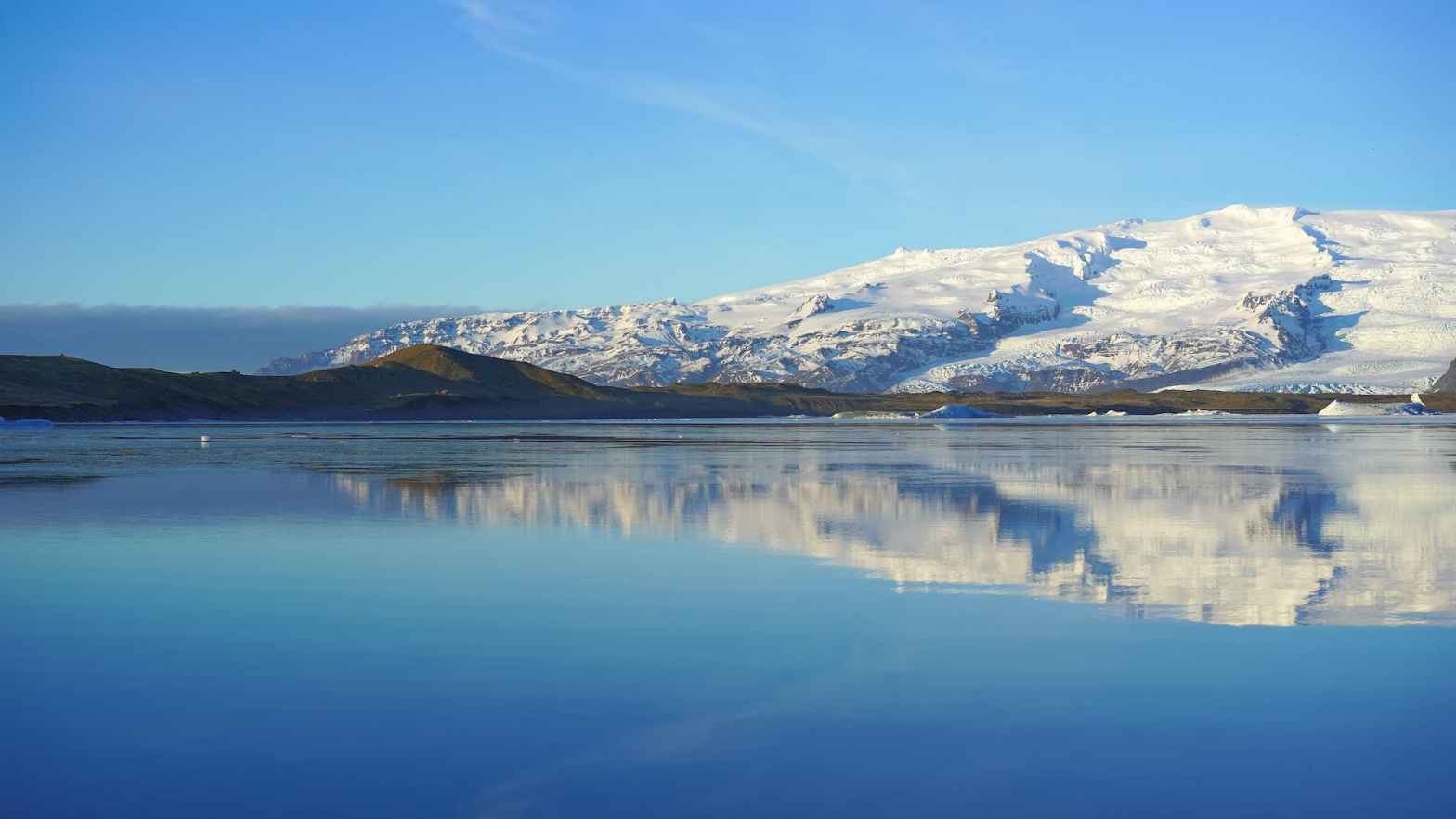
The Arctic region, with its vast expanse of icy landscapes, has long captivated scientists and environmentalists alike.
In recent years, the alarming rate of climate change in the Arctic has raised concerns worldwide.
However, a groundbreaking new study by an international team of scientists has shed light on a previously unknown aspect of the Arctic climate system — the significant role of biological particles in the formation of ice within Arctic clouds.
These findings not only unravel a natural phenomenon, but also carry profound implications for our understanding of climate science and the rapidly changing Arctic climate.
Within the Arctic’s atmosphere, a complex interplay of factors regulates cloud formation and precipitation.
Until now, the impact of biological particles such as pollen, spores, and bacteria on cloud processes had remained largely unexplored.
However, the recent research by scientists from diverse disciplines has illuminated the significance of these minuscule intruders.
The research team collected samples from Arctic clouds and analyzed them meticulously.
To their surprise, they uncovered a remarkable association between the presence of biological particles and the formation of ice crystals within the clouds.
These particles, thriving in the Arctic’s ecosystems, act as catalysts and nucleation sites around which ice crystals form.
By providing surfaces that facilitate ice growth, these particles contribute to cloud glaciation, affecting cloud properties and ultimately influencing climate patterns.
Understanding the role of biological particles in ice formation within Arctic clouds has profound implications for climate science.
For starters, it challenges the existing climate models, which have largely overlooked this crucial factor.
By incorporating the influence of these particles, scientists can refine their models to better predict Arctic climate changes, including variations in cloud cover, precipitation patterns, and temperature fluctuations.
Additionally, this newfound knowledge highlights the intricate connection between the biosphere and the atmosphere.
Preserving the fragile Arctic environment becomes crucial not only for its inherent ecological value but also for its contribution to global climate dynamics.
The groundbreaking research on the role of biological particles in Arctic cloud physics serves as a catalyst for further investigation.
Scientists will continue to unravel the specifics of this process, seeking to understand the intricacies of particle-cloud interactions and their repercussions on the Arctic climate.
Moreover, the integration of these findings into existing climate models will lead to more accurate projections, enabling policymakers to make informed decisions regarding climate change mitigation and adaptation strategies.
Edited by Zeng Han-Jun
Written by Juliana Rodriguez
 Terra Link Research