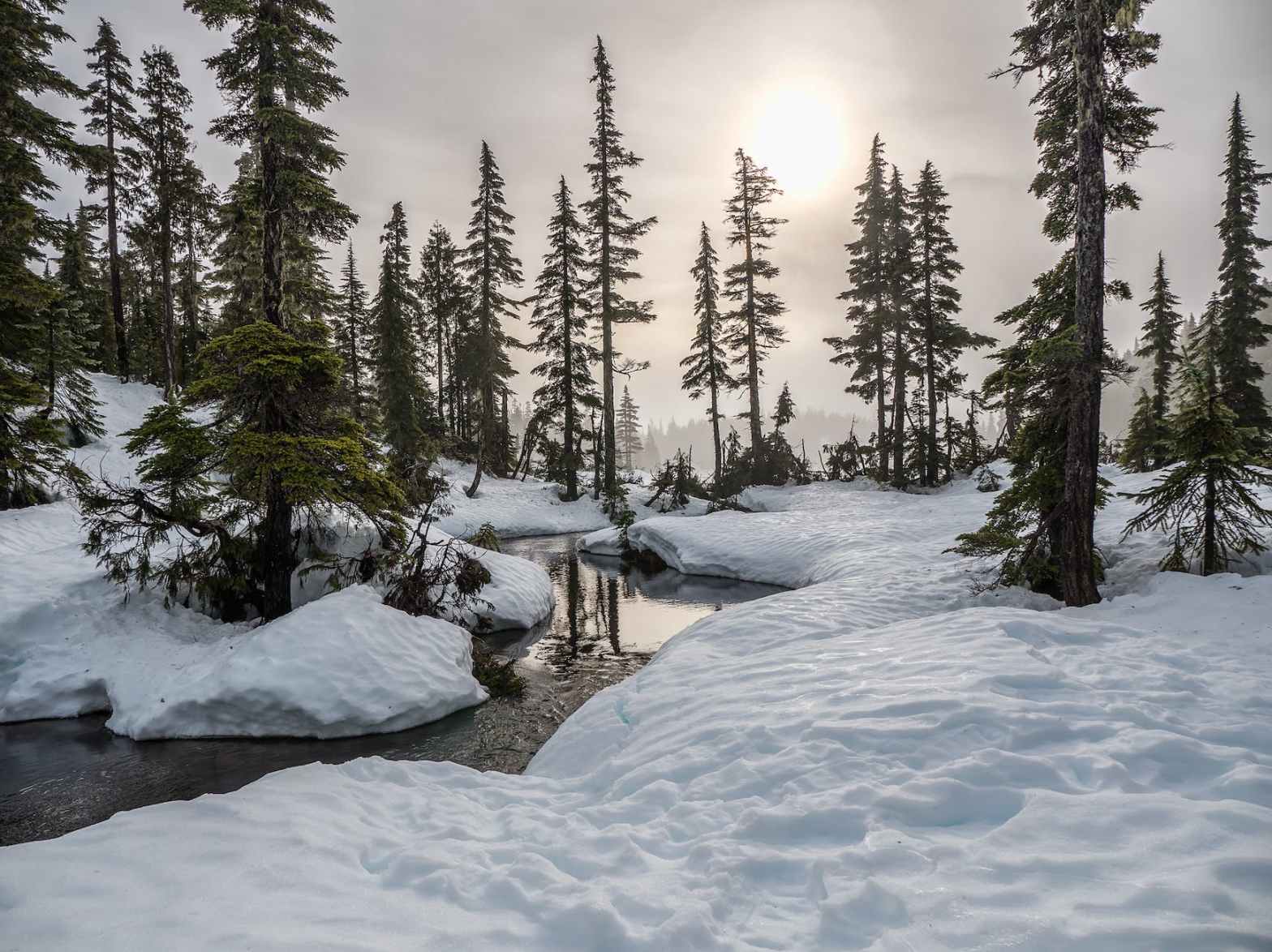
The Pacific Northwest, known for its abundant rainfall, is facing a new challenge in the form of increasingly frequent heatwaves that threaten a vital source of water supply.
A recent study conducted by Washington State University set out to investigate the impact of a singular extreme weather event, the 2021 ‘heat dome,’ on snow melting.
However, the findings revealed a concerning long-term trend of successive heatwaves leading to earlier snowpack melting, with implications for water supply in the region.
The study, which analyzed temperature records dating back to 1940, highlighted a significant shift in springtime heatwaves in the Pacific Northwest. Since the mid-1990s, the frequency and intensity of these heatwaves have doubled, showing a worrying upward trend.
This shift has accelerated the melting of snowpack, a critical water source for the region, ultimately posing an increased risk to water availability during the summer months.
Beyond the Pacific Northwest, the implications of this trend extend globally to areas reliant on snow-capped mountains for summer water supply.
The rising occurrence of heatwaves is a phenomenon not limited to this region alone, and the impact is felt by communities worldwide, heightening concerns about water scarcity.
Edited by Zeng Han-Jun
Written by Juliana Rodriguez
 Terra Link Research