Plastic is one of the fastest growing materials and production is on course to double, to more than one billion tonnes a year, by 2050. With that, will come more pollution. This week, delegates from more than 150 countries are expected to meet in Uruguay to begin negotiations for a historic global agreement to end plastic pollution.
New season, new styles, buy more, buy cheap, move on, throw away: the pollution, waste, and emissions of fast fashion are fueling the triple planetary crisis.
The annual Black Friday sales on 25 November are a reminder of the need to rethink what is bought, what is thrown away, and what it costs the planet.
Sustainable fashion and circularity in the textiles value chain are possible, yet this century the world’s consumers are buying more clothes and wearing them for less time than ever before, discarding garments as fast as trends shift.
Continued carbon emissions would significantly reduce rice and coffee production in Indonesia — one of the world’s top producers of both crops — according to a study.
Continued carbon emissions would significantly reduce rice and coffee production in Indonesia — one of the world’s top producers of both crops — according to a groundbreaking study that will be published by a team of scientists led by a co-chair of the UN’s climate science panel.
The study, titled “Impact of Climate Change in Indonesian Agriculture”, found that continued climate change would cut Indonesia’s rice production by millions of tons a year, cutting exports by a third and leading to price increases of more than 50 per cent.
Lower emissions would still lead to reduced rice yields and price rises — but to a lesser extent.
More than 800 million jobs—about one-quarter of the global workforce—are highly vulnerable to being disrupted by climate change, from weather extremes to the impacts of transitioning to a low-carbon economy, said Deloitte Center for Sustainable Progress report.
“However, policy makers and business leaders can unleash significant economic growth and help create more than 300 million new jobs around the world by 2050 by building a new Green Collar workforce and making decarbonization work,” it said.
The research also finds that India’s workforce and economy are especially vulnerable to the impacts of climate change, which means it has much to gain from an active transition to net zero.
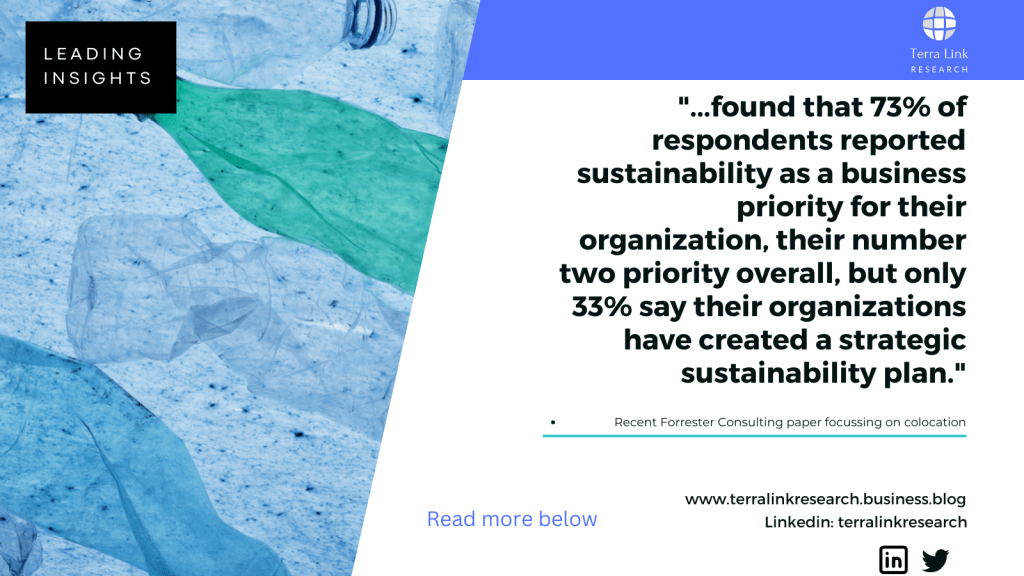
Schneider Electric, an energy management company, commissioned reports by three independent research firms that focused on sustainability in IT and data center operations, and the results reveal a disconnect between intent and action, indicating most of the industry is still at the beginning stage of its sustainability journey.
The three commissioned studies were conducted by analysts at 451 Research, a part of S&P Market Intelligence, Forrester Consulting, and Canalys. They collected data from nearly 3,000 global participants, including the largest colocation and cloud providers, IT solution providers, and IT professionals across many segments and organization sizes.
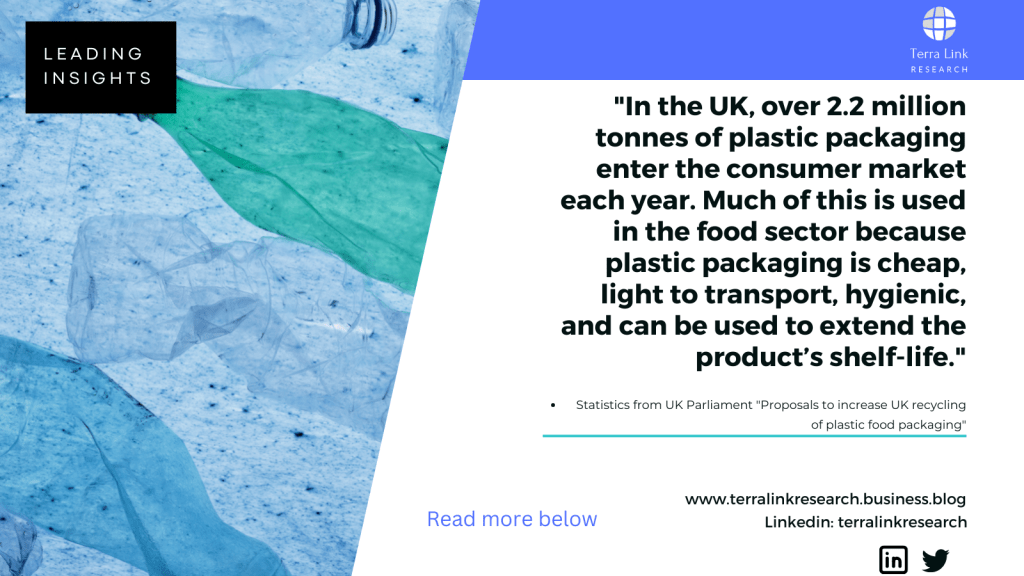
The food delivery sector is a major contributor to packaging waste, and by focusing on the sustainability of its packaging, it can attract a larger consumer base while doing good for the planet, writes Sébastien Pellion.
Sébastien Pellion is global head of impact & sustainability at Glovo, a Spanish delivery start-up.
We’ve all been there – a huge parcel turns up, only for the contents to be something as minuscule as a toothbrush head or a loaf of bread. A mountain of cardboard goes into the recycling, never mind the unrecyclable plastic or styrofoam.
According to 연합뉴스, at least 151 people have been killed and 82 others injured in a deadly stampede in Seoul’s Itaewon district as huge crowds of partygoers, many in their late teens and 20s, converged in the entertainment district for late-night Halloween celebrations.
The deadliest stampede in South Korea’s history happened Saturday night in a narrow downhill alley near Hamilton Hotel in the famous nightlife district after tens of thousands of people visited the area for Halloween.
As of 9 a.m. Sunday, a total of 151 people, including 19 foreigners, have been killed and 82 others injured, 19 of them seriously, according to Choi Seong-beom, head of the fire department in Yongsan, which includes Itaewon.
“All of us at Genkii ! are very sad and send our deepest concerns and condolences to the families who lost loved ones in Seoul. We grieve with the people of the Republic of Korea and send our best wishes for a quick recovery to all those who were injured” Said Han-Jun Zeng, CEO of Genkii !.
In order to strengthen Indonesia’s connectivity to the rest of the world, the Indonesia government is planning to work with countries like Argentina, United States, United Kingdom and France, to improve its telecommunication network.
The government intended to achieve this by procuring satellites from United States, United Kingdom and France. In addition, there were discussions to building a new fiber optic line that would connect the network from Australia to Argentina.
There are also ongoing discussions between the Indonesian and Portugal government to build a fiber optic cable network that would connect Indonesia directly to California, USA.
This is in line with the country’s plan to become a digital economy.
La Buena Suerte – A Terra Link Research Production
1. Weibo, ByteDance and WeChat committed to curbing “bad social influence” by displaying locations of users
Weibo, a popular social platform in China, is committed to creating a safer environment for its users by displaying the users’ locations on their user homepage. Weibo rolled out this new feature on 28 April and users would not be able to turn it off. Douyin (ByteDance) and WeChat have followed in doing so as well.
2. Baidu was the first company to obtain approval from Beijing for its autonomous driving travel service platform
In line with Beijing’s effort to be seen as pioneer in embracing new technology, the government has decided to approve Baidu’s autonomous driving travel service platform. The company was able to handle Beijing’s complex roads while ensuring passengers’ safety and ride experience. So far, Baidu has the largest fleet of driverless vehicles in China.
3. Chinese companies bringing the “Battle of Cell Phones” to South Korea’s shores
South Korea was commonly known as the “Graveyard of Foreign Cell Phones” due to the dominance of cell phones makers like LG and Samsung in their domestic market. Chinese companies believed that the dominance of South Korean brands had in fact turned to the Chinese companies’ favour by spurring rising demand for diversified cell phone models. A number of Chinese cell phone manufacturers were drawn to the South Korean market and internet users remarked that the “Battle of Cell Phones” was about to begin in South Korea.
4. Chinese scientists discover breakthrough transformation of carbon dioxide into synthetic food
Chinese scientists from the University of Electronic Science and Technology of China, the Chinese Academy of Sciences, and the University of Science and Technology of China, manage to turn carbon dioxide into high concentrations of acetic acid, and then fermented acetic acid with saccharomyces cerevisiae, synthesising glucose and fatty acid. The breakthrough would help to further develop new types of agriculture and bio-manufacturing and is an important developmental pathway for carbon dioxide utilisation.
5. China to improve its network of hydrogen refueling stations by 2025
According to China’s 14th five-year plan, by 2025, the network of hydrogen refueling stations would be greatly improved; the technical designs, cost of operations would be reduced thereby improving the synergy between fuel cell parts and components products would also be reduced. Now, the number of hydrogen refueling stations is more than 250, and this number is rising. Shanghai Jie Hydrogen Technology predicted that the number of domestic hydrogen refueling stations will exceed 1,000 by 2030.
Japan government has announced the construction details for the tender put together by Goto City Offshore Wind Power Generation LLC to build offshore wind power generation projects off the coast of Goto City, Nagasaki Prefecture.
Top government officials handling this project have emphasised the need for the project developer to prioritise local Japanese companies when it comes to procurement of construction materials. This should be applied to most of the project procurements except for concrete, which would be purchased entirely from local Japanese firms.
Additionally, all sub-services such as assembly parts, equipment, operational management and workers should be sourced locally so that it could help to boost the local economy.
Sources revealed that the top government officials and project team would next work very closely with the related Chambers of Commerce on the selection of local companies.
In line with the trending awareness of ESG and sustainability considerations, the project developer would also have to consider the offshore wind power projects’ impacts on the fisheries, ship owners, local communities, heritage cultural sites and other environmental considerations (both marine and land).
All electricity generated from renewable energy in the area would be supplied to the local area through Kyushu Eletric Power Co.
The working committee would, over the upcoming period, organise extensive consultations with the relevant local communities on the project’s potential impact to the area’s unique heritage status.










 Terra Link Research