
La Buena Suerte – Issue 23 April: Curating the Trending ESG, Sustainability and Tech News in China

La Buena Suerte – A Terra Link Research Production

1. Huawei aimed to be number one in the intelligent self-driving car industry

Yu Chengdong, CEO of Huawei Terminal BG and CEO of Intelligent Vehicle Solution BU declared that Huawei is going to be the number one brand in the intelligent vehicle space and that no one will remember who is in the second place. He also acknowledged that their current target of selling 300,000 vehicles per year is difficult because high prices and low supply of chips. He cited that one chip used to cost around USD 0.15 but now it costs about USD 320 per piece, and that they need to install about 8 to 9 chips into a single car.

Source: https://www.163.com/tech/article/H583DJAO000999LD.html

2. Xi Jingping called for a rethink on talent attraction and emphasised creating a liveable environment to attract talents from all over the world

The Chinese premier recently shared that the growth of Industrial 4.0 engine would help to usher in a prosperous era for its people and a rethink in their talent attraction policy is critical to realising that. He added that one of the keys is to foster a liveable environment in order to attract a strong pipeline of talents, and also to create a flexible working environment where these talents can actively pursue their researches and openly contribute their expertise.

Source: https://www.163.com/dy/article/H4QVTIMP0512D3VJ.html

3. Little Red Book reduced its workforce by 9%, explained that they were just trimming and not laying off workers

Nearly one in ten Little Red Book employees lost their jobs but spokesperson from Little Red Book said that this was not a layoff, but normal replacement of personnel based on the results of the annual performance appraisal. Sources revealed that the department with the most layoffs was the department with the most recruitment. Analysts shared that beauty and personal care contributed most of the revenue to Little Red Book but now face the most contraction as well.

Source: https://www.163.com/dy/article/H5KD87KA05199NPP.html

4. The growing potential of China’s Green Hydrogen market

According to the China Hydrogen Energy Alliance, the output value of China’s hydrogen energy industry will reach USD 150 billion by 2025, the demand for hydrogen will be close to 60 million tonnes by 2050. This would help to achieve carbon dioxide emission reduction of about 700 million tonnes. Industry watchers said that Hydrogen industry is fast becoming a new growth engine fuelling economic development. More than 100 listed Chinese companies have already announced their involvement in the hydrogen industry chain.

Source: https://www.163.com/dy/article/H5JMJ6L20550C0ON.html

5. Chinese scientists managed to apply quantum machine learning to digital models for the first time

A research team led by the Chinese Academy of Sciences, cooperated with Origin Quantum to use quantum programming algorithms, and combined it with quantum machine learning algorithm to reduce the storage size of the digital terrain models while providing higher accuracy. This application would spark new ideas for more complex computing problems in the future and expected to be more widely used in simulating Earth’ environmental and sustainability elements.

Source: https://www.163.com/dy/article/H5J3RP5P0514R9P4.html

Podcast – Seaweed as Plastic Alternative and Survey on Adoption of ESG Standards and its Impact on Businesses

Episode Description

In this episode, I shared about the following:

1. How a startup is planning to tackle the plastic waste situation with their seaweed product; and

2. Survey on the adoption of ESG standards and its impact on businesses. 

South Korea intends to leapfrog its competitors for the data center business, with its renewable energy project

Photo by Brett Sayles

South Korea government intended to grow their data industry and positioned it as one of the growth engines to develop its future economy. South Korea believed that their advantages lie in their ultra-high-speed internet and stable electricity supply.

The country’s top officials would be studying closely the construction of a new hydrothermal energy supply facility in Chuncheon City, Gangwon Province, which would be able to harvest kinetic energy from the water of Soyang River, thereby generating electricity with low carbon emissions. The Soyang River Dam is the largest sand gravel dam in East Asia.

With this, the facility would be able to generate hydrothermal energy of around 16,000RT per year. The local government, Gangwon-do, Chuncheon City, and the Korea Water Resources Corporation (K-water) will jointly invest in this project. The project team intended to deliver this project by 2027.

The South Korea government would distill critical learning points from this project for the development of future similar projects in the Gangwon cluster.

The Gangwon cluster would be designated for building a hydrothermal energy cluster comprising a cloud business platform complex, a hydrothermal energy-based smart cutting-edge agricultural complex, and a complex specialising in hydrothermal energy-based water industry by tapping into the cold water (hydrothermal energy) of Soyang Dam.

South Korean government hoped that this investment would be able to attract more eco-friendly data centers and IT businesses into the country, and to create new jobs that are in line with the 4th Industrial Revolution.

They targeted to attract six data centres and more than 250 data-related companies to set up business in this area and intended to attract other types of businesses such as smart farms and research parks.

The Gangwon cluster team would organise an event on Friday, 22 April, for companies to demonstrate their hydrothermal energy projects. Selected companies may be eligible for financial support for some parts of their projects.

La Buena Suerte – Issue 16 April: Curating the Trending ESG, Sustainability and Tech News in China

La Buena Suerte – A Terra Link Research Production

1. WeChat’s latest rival in internet video and voice calling products

China Mobile claimed that their new 5G internet video and voice calling products, would be able to provide stable and uninterrupted conversations. Additionally, they highlighted that users do not need to download smart phone apps such as WeChat, in order to perform video and voice calls over the internet. Apart from providing 5G ultra-clear video calls, China Mobile would also include 5G video customer servicereal-time translation between Mandarin and English languages, screen sharing and remote collaboration capabilities.

Source: https://www.163.com/dy/article/H4Q03GBS0512D3VJ.html

2. Chinese scientists achieved new breakthrough in quantum direct communication

Chinese scientists recently achieved success in realising quantum direct communication distance of 100km with a new quantum direct communication system with mixed coding of phase quantum states and timestamp quantum states. The team claimed that this achievement is currently the longest quantum direct communication distance in the world. With this, the Chinese scientists would be able to develop advance long distance communication systems with secure and reliable channels.

Source: https://www.163.com/dy/article/H4QVTIMP0512D3VJ.html

3. Reflower enlisted virtual idol Angie to launch their first retail shop on the metaverse

In a move to secure the Gen Z market, Reflower has enlisted the help of virtual idol “Angie” also popuarly known as “Ah Xi” in China, to advertise their first online retail store on the metaverse. Reflower is a B2C online flower business in China since 2015. The company has been serving almost 15 million customers every month in over 300 cities in mainland China. It would start to sell 30 varieties of high-quality peonies and also perfume products on the metaverse for a start.

Source: https://www.163.com/tech/article/H4R34F5600097U7R.html

4. TikTok, Kuaishou and Little Red Book announce new and similar function in their social app

In an attempt to moderate social behaviour on social platforms, several companies such as TikTok, Kuaishou and Little Red Book would integrate the feature of displaying IP addresses of user accounts, tagging the information to the user’s comments and/ or user’s homepage. Other displayed information might include the user’s location (Country, city, province, district, etc). Users would not be able to switch off this function. TikTok announced that they would begin testing of this function by end of April.

Source: https://www.163.com/dy/article/H51JKKC80512B07B.html

5. Chinese officials conducted site inspections and highlighted sustainability and ESG concerns

Chinese officials conducted site audits and highlighted sustainability and ESG concerns in the following sectors and places – frauds in the iron and steel industry in Handan, Hebei province, sewage discharge issues in the grand canal located at the Suqian section of the Jiangsu, illegal water extraction and water use in Ordos, Inner Mongolia, illegal mining of sand and gravel in Tibet and lack of control in pollutant emission in the Wuchangshi area in Xinjiang.

Source: https://new.qq.com/omn/20220416/20220416A01J4V00.html

Thailand refuses to be a laggard in environmental policies

Photo by u9f94 u6708u5f37

In line with the trend of tightening environmental regulations around the world, the Thai government would go ahead with the enforcement of Euro 5 emission regulations in 2024.

Currently, the Euro 4 standard is the mandatory minimum standard for fuels used in Thailand, although that would change in 2024. Currently, Euro 4 limits place restrictions on the amount of carbon monoxide (CO), hydrocarbons (HC) and nitrogen oxides (NOx). As well as reducing those pollutants, Euro 5 further limits the amount of non-methane hydrocarbons in the exhaust.

One type of particulate matter, for instance is the soot seen in vehicle exhausts. It can also be caused by unburned carbon in gas or oil. To meet the stringent new requirements, all new diesel cars should be specially fitted with particulate filters.

Apart from the enforcement of EURO 5 standard in 2024, the Thai government would also work on the environmental enforcement of waste produced from power plants and sewage released from various types of buildings.

Additionally, the Thai government is consulting internally with all relevant agencies on the roadmap for enforcing Euro 6 standard in the country.

While Thailand is seeking internal consultations on the enforcement of Euro 6, the European Commission is expected to formalize the stricter Euro 7 standard in July 2022.

However, industry watchers highlighted that the new Euro 7 standard might not come into effect until later this decade and there were also concerns that countries that are slow to adopting the stricter standards might become “dumping grounds” for pollutive cars.

Podcast – Latest update on Japan’s plan on data centres and the data centre situation in Asia Pacific region

Episode Description

In this episode, I shared about the following:

1. Japan’s latest business strategy for the country’s data centres; 
2. Data centres’ quick shift to harnessing renewable energy sources;
3. Business case of owning a data centre and the gradual uptake in using colocation faciltiies; and
4. How ESG and Sustainability ratings and concerns might affect data centres in general and its potential impacts to data centres in Asia Pacific region.

Samsung pulled off unexpected game-changing move that might accelerate the growth of South Korea’s technological dominance

Photo by Luis Quintero

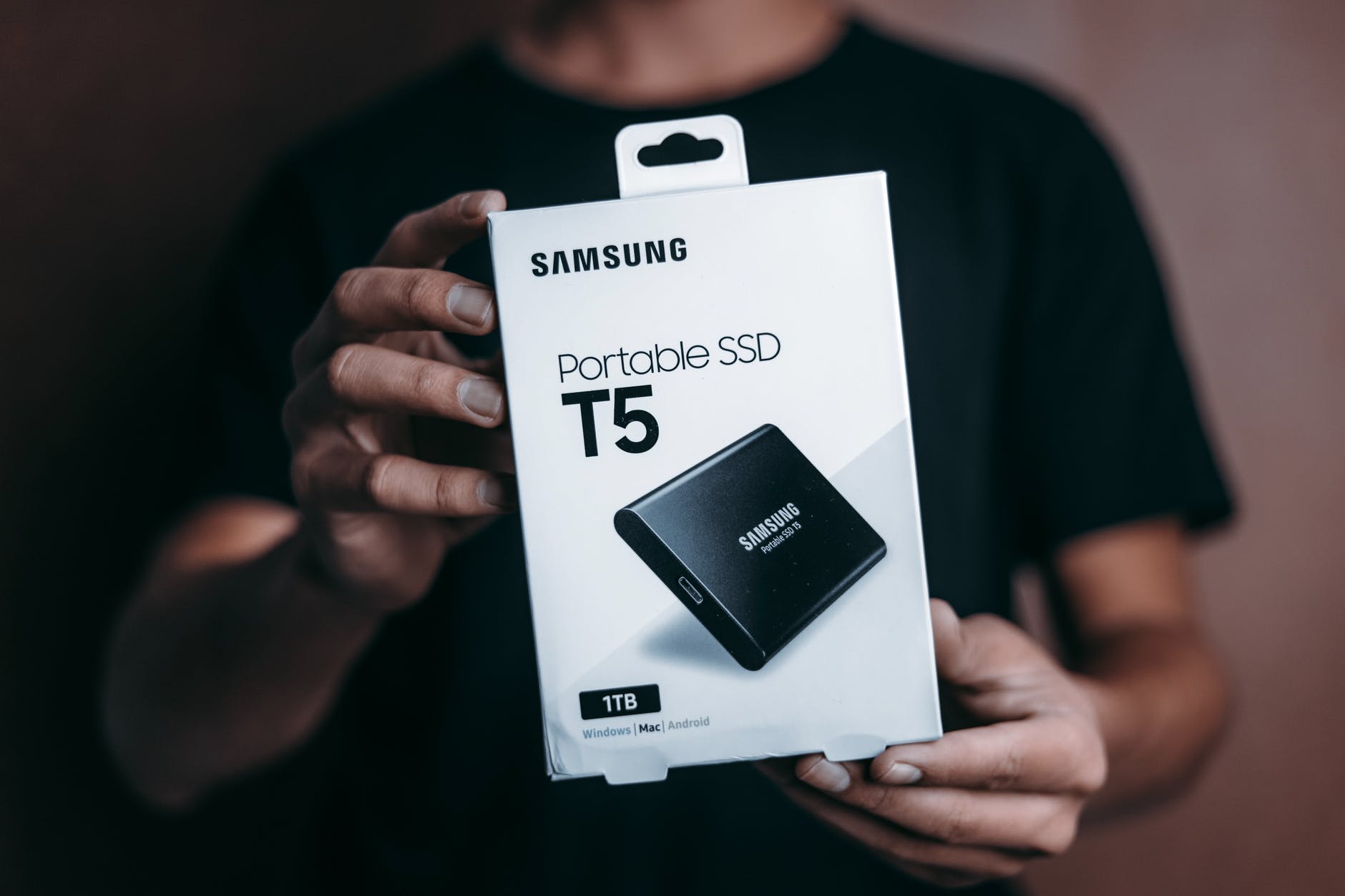
Samsung Electronics announced that they would make a total of 276 patents available to Small and Medium Enterprises (SMEs) free of charge. The initiative was made with the support of the South Korean government.

The move was expected to spark even more innovations within their SMEs segment and improve their industry’s competitiveness.

Samsung Electronics would put forth 276 patents and technology in seven technology fields for sharing, including networks, semiconductors, displays, audio/ video, medical devices and appliances.

SMEs that are interested in this programme would need to put up an application, have it reviewed by an evaluation committee and if approved, would receive the patent free of charge.

Samsung Electronic is part of the South Korean government technology transfer programme that has been going on since 2013. Since then, 25 large and public enterprises, including Samsung Electronics, have transferred more than 2,400 patents to over 1,000 companies.

Previous technology transfers have resulted in significant successes in areas such as digital payments, smart remote control and the world’s first Internet-of-Things Automatic Cardiac Shock Machine.

This is the first time that the conglomerate is providing the patents free of charge. Industry watchers noted that this is a game-changing move which might encourage even more large enterprises to follow suit, eventually becoming a critical step to increasing South Korea’s competitiveness in the global technology race and spurring new innovations in the sustainability arena.

La Buena Suerte – Issue 9 April: Curating the Trending ESG, Sustainability and Tech News in China

La Buena Suerte – A Terra Link Research Production

1. Tik Tok’s management strategy for the future

After a series of crises over geopolitical conflicts in 2020, Tik Tok is gradually pulling away from the system on which it has relied on for success. The company continues to burn cash as it decentralises, its ranks now with more executives from foreign nationalities, with rich overseas backgrounds, possessing political and business ties. Its internal data policy becomes stricter, with sources revealing that as early as 2019, the local team in China could not access much of Tik Tok’s data information. To address government concerns about data security, Tik Tok stores user data in the United States and backs it up in a data center in Singapore.

Source: https://www.163.com/dy/article/H4CPVDRT0531M1CO.html

2. Huawei topped in number of patent applications in European Patent Office, ahead of Samsung and LG

Following the announcement that Huawei had topped in the number of patent applications in the European Patent Office, its president reminded Huawei staff that the company must be prepared to fight a protracted war, build a reasonable price benchmark for its products and allow the industry to use their patented technology fairly and reasonably. Internal documents showed that the company will focus on improving their communication and negotiation strategy. Some employees pointed out that their patents and black box technology are critical for survival.

Source: https://www.163.com/dy/article/H4ALJK220514R9KC.html

3. Chinese scientist claimed discovery of new solar thermal technology to produce high amount of hydrogen

Chinese scientist, Li Yaguang claimed that he would be able to build a new type of solar thermal system, which allows the large-scale reforming of methanol driven by outdoor sunlight to produce hydrogen. He said that his outdoor experiments showed that under the irradiation area of 6m2, the daily hydrogen production could reach 23.27m³. With this achievement, he believed that his device has the potential to become a green energy supply device for methanol hydrogen refueling stations, thereby providing hydrogen for new energy vehicles.

Source: https://www.163.com/dy/article/H4A5USJ105119734.html

4. National People’s Congress was warned about white pollution, waste plastic recycling, garbage classification, and preschool education

Academic Li Jinghong warned about white pollution, which results from the lack of prevention and control of agricultural film residue pollution. Besides this, he also highlighted potential issues stemming from the chemical cycle of waste plastics, the construction of urban plastic recycling systems and the strengthening of preschool education for young children.

Source: https://www.163.com/tech/article/H1KSJHAU00097U7T.html

5. Shared power bank companies continue to face strong headwind challenges

In just 40 days, 15 shared power bank companies have obtained financing from more than 40 finance institutions, with a total financing amount of around USD 190 million, almost 5 times the financing amount obtained by the shared bicycle industry in the same period. Most of the shared power bank companies were still in the red, and would stop operations without sufficient financing. Companies like Meituan and Zhumang Technology are restructuring by ditching their current business model. Survey showed that many consumers are still willing to accept price increases but consumer behaviour is shifting to utilising shared power banks for emergency.

Source: https://www.163.com/dy/article/H4BANJL005118O92.html

Design a site like this with WordPress.com
Get started