La Buena Suerte – A Terra Link Research Production
1. Chinese military medical university unexpectedly discovered natural compass in brain when researching on brain-computer interfaces
Prof. Zhang Shengjia’s team of neurosurgery departments at the army military medical university Xinqiao hospital, discovered for the first time a “natural compass” in rats’ brains. The team shared that the discovery might aid in advancing treatment of neurodegenerative diseases such as Alzheimer’s disease, and inspire brain-like intelligence research, drawing on the spatial coding and memory mechanisms of neural circuits to develop an energy-saving brain-like navigation system.
2. Huawei’s first public investment into a lithium battery company, together with Xiaomi
Last week, Xiaomi and Huawei announced their investment in the lithium battery company, Weilan New Energy Technology. Sources revealed that Weilan New Energy Technology is cooperating with Weilai Automobile to launch a hybrid solid-liquid electrolyte battery with a single charge range of 1,000 kilometres based on et7 models, with a battery pack of 150 degrees of electricity and an energy density of 360Wh/kg. The solid-state battery is expected to begin mass production at the end of this year or the first half of next year.
3. Mountains of rubbish dumped at Hong Kong’s camping sites during the pandemic period
Camping outings have become one of the top choices for relaxation for many Hong Kongers during the pandemic period, but environmental groups said that campers showed lack of environmental awareness by dumping large amount of rubbish at these camping sites. One environmental group found mountains of domestic garbage piled up in the vicinity of the camping sites, in addition to visible damages to trees and pointed that the locals are responsible for this.
4. Solar PV panel installers rush to sell solar panel products to rural areas, causing chaos with zero dollar loans
Rural areas in China are in a frenzy to install distributed solar panels on the roof top of their houses, causing much chaos. Many farmers fallen prey to zero dollar “Photovoltaic loans”. Farmers, especially those who are saddled with heavy debts, believed that they are renting out their roof space to earn extra income, but realised that they had become responsible for maintaining photovoltaic panels and becoming one of the hardest hits among the buyers.
5. Chinese internet watchdog issued warnings to Douban, prompting the company to cease its app’s popular function for creating private secret chat groups
Douban.com is a Chinese social networking service for users to record information and create content related to film, books, music, recent events, and activities in Chinese cities. One of its popular functions, creation of private chat groups came under the scrutiny of the Chinese internet regulatory agency for bad social influence. Douban responded by ceasing this function and shutting down many popular chat groups.
La Buena Suerte – A Terra Link Research Production
1. Chinese netizens puzzled over Meta’s (formerly Facebook) new user account with Tik Tok
Meta just opened an account on TikTok and managed to attract and more than 450,000 fans within a few days. Netizens reported that there was no content from Meta’s Tik Tok account and speculations were rife about Meta’s intention(s). Some netizens said that it’s a marketing ploy for a brand name like Meta to open an account in Tik Tok, without posting any content, causing intense curiosity among Tik Tok users to attract potential Chinese users to open an account in Facebook.
2. Chinese government releases their plan on the development of the hydrogen energy industry
The National Development and Reform Commission issued their medium to long term plan on the development of the hydrogen energy industry (2021-2035). The Chinese government will focus on promoting the application of hydrogen fuel cells in heavy and medium-duty vehicles, actively explore the application of fuel cells in ships, aircraft and other types of transport while continuously improve the technology of hydrogen application technology in the transport sector.
3. DingTalk cooperates with Hangzhou Lingban Technology to develop augmented reality (AR) ecosystem
DingTalk (a subsidiary of Alibaba) and the Chinese AR smart glasses company Hangzhou Lingban Technology (Rokid) signed an agreement to jointly explore the development of extended reality office environment, content and solutions for different industrial sectors. DingTalk is an enterprise communication and collaboration platform developed by Alibaba Group. Rokid specialises in the research and product development of Mixed Reality and Artificial Intelligence.
4. Express delivery services under immense stress in China
Due to the Covid 19 pandemic and the imposed restrictions, express delivery companies’ delivery operations were suspended since the beginning of this month and the restrictions were even applied to mail deliveries. The stresses in the system are beginning to extend its effect to the ECommerce sector. Companies like SF Express Logistic are rethinking their business model in order to pull ahead of this crisis.
5. Restaurant owners in China are suffering huge losses even with digitalisation
Restaurant owners in China continue to suffer huge losses despite digitalisation efforts. Analysts highlighted that digitalisation efforts must go beyond transforming marketing and to extend to areas like productivity, operations and finance. The benefits of digitalisation could only be fully realised when the entire value chain digitalise. Another way is to reduce the cost of ingredients by enhancing upstream along the food value chain. Companies like Haidilao were cited as a good case study, has its own direct supply of vegetable production centres, logistics centres and central kitchens throughout China.
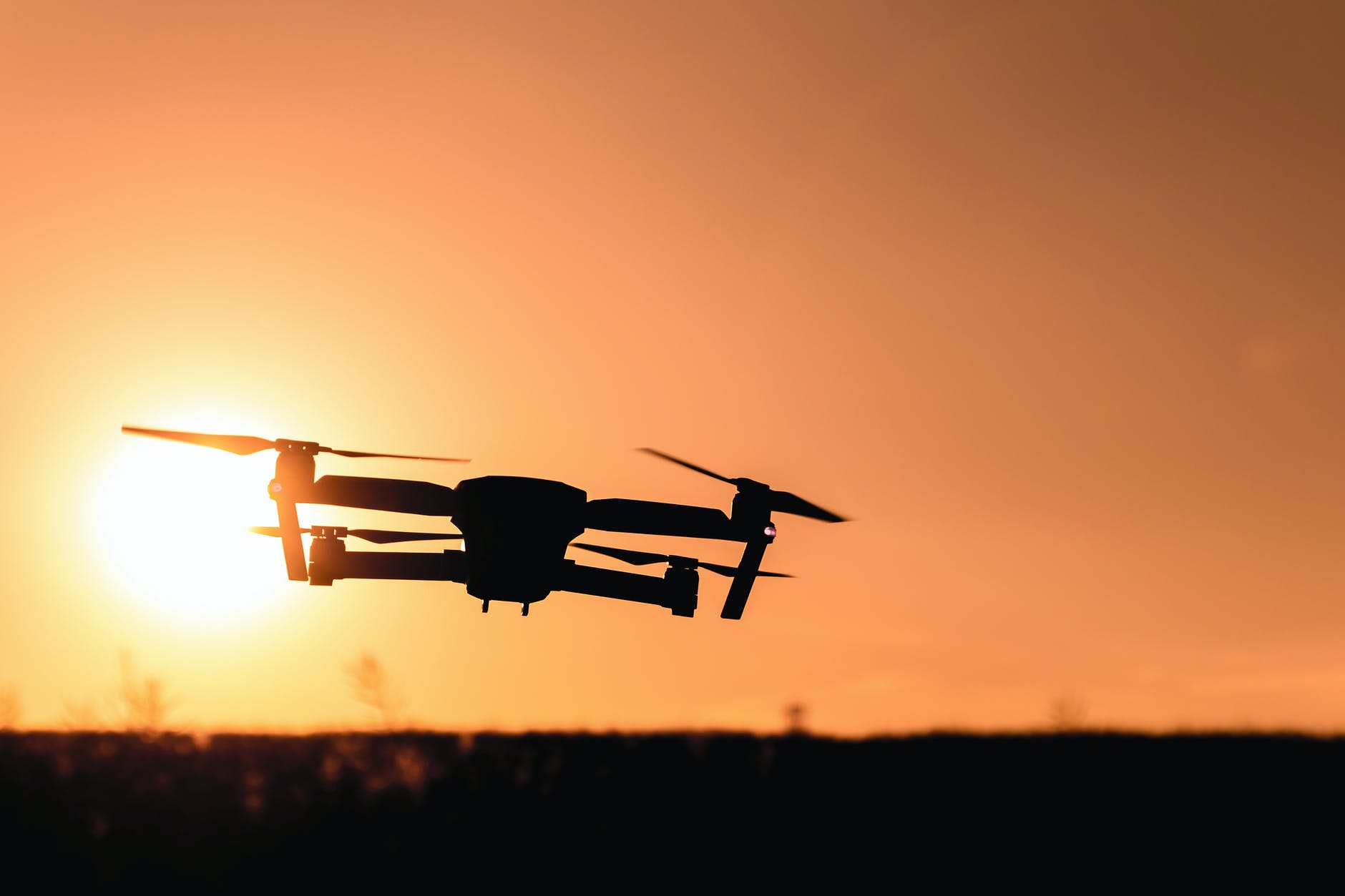
The South Korean government would begin the development of solar-powered drones that could operate at the stratospheric altitude. The development would take into account commercialisation and adaptability of these drones to other types of operations in the future.
In the upcoming period, the working group would carefully pick four research and development (R&D) organisations to undertake the development of the solar-powered drones. The R&D would focus on (1) core technology research, (2) propulsion technology (3) aviation technology and (4) system design.
The Zephyr stratospheric UAV, created by Airbus in Europe, held the world’s longest flying record. Zephyr flew for 26 days in a row while carrying 5 kilogrammes of equipment, and South Korea intended to beat that record by a large margin.
To beat that, South Korean government wanted their upcoming development to culminate in solar-powered drones that could carry more than 20 kilogrammes of mission equipment and be able to operate at the stratospheric altitude for more than one month.
Countries all around the world are actively developing stratospheric unmanned aerial vehicles (UAVs) for ground observation or re-transmission of communications. Stratospheric UAVs could also act as pseudo-satellites, flying at far higher altitudes than standard aircraft and costing considerably less to launch than a satellite.
The working group had emphasised that the high altitude solar-powered drones would be deployed for monitoring disasters like forest fires, continuously throughout the day.
As committed by the South Korean government last year, a budget of USD 30 million would be set aside for this project and now, a taskforce would be formed to oversee the project, in areas such as technology transfer, commercialisation, evaluation, performance management and task planning.
La Buena Suerte – A Terra Link Research Production
1. Chinese woman shot dead by US law enforcement in California
Netizen identified Chinese woman who was shot dead by US law enforcement officers in California, as one of the former top graduates of Yale university and former employee of Pfizer. Accounts from law enforcement officers claimed that the shooting response was due to the deceased brandishing a knife when served an eviction order. Netizen added that he had informed law enforcement of deceased’s schizophrenia condition and requested for them to settle via peaceful means. Other netizens said that the female law enforcement officers had tazers, plus the sheriff called for canine unit which provoked the deceased’s aggressive response.
2. Chinese officials discovered flaws in hydropower stations during blitzkrieg audit
Inspectors from the state council safety committee, visited a hydropower station in Yunnan and discovered many cracks in the walls of the station, several degrees of water leakages in various places and other safety issues. The inspectorate team then visited 46 other enterprises in seven key industries such as hydropower, mining, hazardous chemicals, etc and discovered several issues of concern. The lack of clarity in regulatory responsibility and administrative responsibility, complicated the supervision of these infrastructures.
3. Saudi Arabia in discussion with China on the use of Chinese Renminbi for oil trading
Rumors run rife on the internet that India and Belarus intended to do oil trading with Russia, without using the US dollar. Apart from this, Saudi Arabia, the world’s largest crude oil exporter, was considering doing oil trading with China, with the Chinese Renminbi. This would enhance the status of the Chinese Renminbi, which previously ranked fourth in the world, accounting for 3.2% in global payments. After the news was released, the yuan rose nearly 200 basis points.
4. Alibaba laid off almost 30% of its workforce and may continue to do so
Downturn in the economy, turmoil in the financial markets and the sharp decline in the value of the technology stock markets, continued to plague Alibaba and sources indicated that layoffs might continue. The lifestyle service group was impacted the most by the recent corporate restructuring. ECommerce, research and development, and operations were not affected but the headcounts of Alibaba’s cloud unit were frozen. Alibaba was facing difficulties in sustaining revenues and would focus more on current businesses and overseas expansion.
5. Will Liu Qiangdong be the richest man in China next year?
According to Hurun Research Institute’s latest list of top 20 richest people in China, 68-year-old founder of Nongfu Mountain Spring, still ranked 15th in China with 455 billion yuan after his wealth shrunk by nearly 100-billion-yuan last year. Bytedance’s Zhang Yiming ranked 2nd with a wealth of 340 billion yuan, Zeng Yuqun ranked 3rd and Ma Yun at 5th placing. Netizens argued that Liu Qiangdong might have the greatest potential to be the richest person in next year’s ranking. Netizens highlighted Liu Qiangdong’s trump card, JD Finance with plans for IPO this year.
In 2020, the Japanese government announced that it would begin exploring the possibility of constructing and operating offshore wind farms with a maximum capacity of 155 MW off the shores of Noshiro City and Happo Town in Akita Prefecture.
The Japan Renewable Energy Corporation was then entrusted with undertaking a variety of studies, including environmental impact evaluations, as well as meetings with the local population and other stakeholders.
The move was part of the country’s plan to promote greater use of renewable energy.
Fast forward to 2022, the United States stated earlier this month that it would prohibit Russian oil and other energy imports to punish Moscow for its aggressiveness, despite the fact that Washington was not a significant purchaser of Russian oil.
Experts pointed out it might be difficult for Japan and its firms to follow suit, including giving up holdings in the Sakhalin 1 and Sakhalin 2 large-scale oil and gas projects in Russia’s Far East, which are critical to Japan’s energy security.
Japanese policymakers were afraid that Russia’s invasion of Ukraine and the subsequent spike in oil prices might harm economic development, despite the fact that there has been no immediate severe interruption in energy supplies. As such, they emphasised that there was an urgent need to expedite the use of renewable energy as a domestic energy source for decarbonization, which was also crucial for energy security.
Earlier this year, the Japanese government chose three consortiums, all led by Mitsubishi, to operate offshore wind farms with a combined generation capacity of 1.7 gigawatts in Tokyo, Akita, and Chiba prefectures.
Analysts were taken aback by the trading house’s group’s suggested tariff rates of Yen 11.99 per kilowatt hour, Yen 13.26 per kWh, and Yen 6.49 per kWh, which were much below the ceiling price of Yen 29 per kWh.
It was also noted that a number of major wind power corporations, including Denmark’s Orsted and Germany’s RWE, were interested in entering the Japanese market. Both companies were active in the Akita Prefecture area during this period.
Japanese official shared that the earlier exercise revealed that the prices were comparable to that of solar power. On this basis, the government wanted to accelerate the production of this renewable energy source and use the information gleaned from the earlier exercise to inform the developments of new renewable energy sites.
The working group from the Japanese government would convene a discussion forum with the relevant government subcommittees on 22 March, to discuss about the new criteria for the next offering exercise.







 Terra Link Research