Episode Description

In this episode, I shared about:
1) Indonesia’s recent initiative to install solar-powered LED street lighting across South Sumatra;
2) its implications on urban planning; and
3) the market of these products in the future.

Cutting-edge research on climate change, environment, sustainability risks
In this episode, I shared about:
1) Indonesia’s recent initiative to install solar-powered LED street lighting across South Sumatra;
2) its implications on urban planning; and
3) the market of these products in the future.

1. USD 390 million of taxes required to clear 1.6 million tonnes of plastic waste
According to estimates by Young World, the plastic waste generated by takeaways amounted to about 578,000 tonnes to 1.6 million tonnes annually. It would take about USD 390 million to properly dispose 1.6 million tonnes of plastic waste and most of the funding would be borne by taxpayers. Others argued that plastic waste from takeaways, stood at about 4% of the total plastic waste generated therefore did not matter much. There are greater calls for online delivery platforms to be transparent about plastic takeaway usage so that deeper insights could be surfaced for relevant policy making.
Source: https://new.qq.com/omn/20220306/20220306A06XVN00.html
2. India’s population surpass that of China’s
A rampant rumor on the internet claimed that India’s population has reached 15.1565 billion, surpassing China’s population of 14.126 billion. The rumor sparked intense discussions among the Chinese netizens. The rumor was debunked as fake news, but estimates showed that India might really surpass China in population size between 2023 and 2024. Even with China’s three children policy already in place, India’s population growth would outpace the rest. Studies showed that by 2023 or 2024, India would become the most populous country in the entire world.
Source: https://new.qq.com/omn/20220306/20220306A0295900.html

3. General Secretary Xi Jinping emphasised the importance of environmental protection and its link to food resources
In a recent meeting, General Secretary Xi Jinping pointed out the importance of adopting a holistic perspective to agricultural and food production. Food production has long shifted away from just satisfying hunger of the people. Over the years, it has evolved around the concept of eating well and moving forward to eating healthier food. He cited the need for extensive industry transformation, from environmental protection of agricultural land, diversifying food sources, structural reform of the agriculture supply chain, to the strategy of rural revitalisation.
Source: https://new.qq.com/omn/20220304/20220304A072FQ00.html
4. Tencent may have the greatest potential to lead the metaverse race in China
Analysts speculated that Tencent’s recent recruitment drive for Project “ZPlan” was indicative of the company’s interest in the metaverse industry. Even though Tencent did not announce their business interest, industry watchers thought otherwise and pointed to the company’s recent metaverse-related trademark registrations. Industry watchers also highlighted Tencent’s intention to acquire Black Shark Technology. The potential acquisition would bolster Tencent’s virtual reality (VR) capability, and might propel the company to the leading position in the metaverse race.
Source: https://new.qq.com/omn/20220310/20220310A03UVR00.html
5. The achillies’ heel of China’s growing technological dominance
According to IDC’s report, the volume of China’s digital will reach 48.6 ZB by 2025, translating to about 27.8% of the total global digital data volume. China’s technology market rely mostly on hard drives that are manufactured by Western Digital, Seagate and Toshiba. Seagate Technology and Western Digital, dominate with a combined global market share of about 80% to 85%. Chinese market is able to produce flash drives locally but the prices are higher than imports. Estimates showed that around 70% to 90% of flash drives sales were attributed to imports.
Source: https://new.qq.com/omn/20220310/20220310A0AFF900.html
In this episode, I shared about the following:
1. Glitter as a form of microplastics and how microplastics in general pollute our environment; and
2. Global temperature rise leading to bleaching of coral reefs and its impact on the fishing sector.



The South Korean government intended to gamify educational courses to attract more young people into environmental-related fields such as chemical safety, and also raise awareness among children about the importance of safety awareness when dealing with chemicals.
Latest technology such as virtual reality (VR) and augmented reality (AR) would be integrated into experiential learning modules so that participants could experience for themselves near real-live working environment without having to deal directly with hazardous chemicals.
The experiential learning modules would also help the participants to familiarise themselves with evacuation procedures.
Apart from the use of VR and AR, the government would also plan for the development of board games for young children. The board game concept was conceived to make learning fun while driving across the awareness of safety culture.
A taskforce would be distributing the board game to more than 50 junior schools that are located in Seosan, Yeosu, Cheongju, Gunsan and Ulsan.
The junior schools were specially selected as they were located near to major industrial hubs and would also serve as evacuation centres if chemical accidents were to occur at any of the industrial hubs.
As part of the safety awareness pilot project, the South Korean government had already installed chemical safety signboards in the selected areas:
a. Seosan – 8 signboards
b. Yeosu – 5 signboards
c. Cheongju – 20 signboards
d. Gunsan – 23 signboards
e. Ulsan – 44 signboards
The new boardgame would allow participation of up to four players, with dices and cards.
Players would take on different roles in the game, revolving around the concept that safety officers have to rescue citizens from villians who use chemical for nefarious purposes.
Other interactive elements include videos and learning journals in 3D environment.
In this episode, I shared about the following:
1. The use of bamboo as a construction material and some of the considerations in doing so; and
2. The general situation of deforestation in Southeast Asia and its contributing factors.

In line with the Indonesia’s plan to increase utilisation of renewable energy and their plan to achieve net zero emission by 2060, the Indonesian government has installed a total of 350 units of solar-powered LED street lighting in 4 locations across the South Sumatra province. The breakdown of the installations was as followed:
a. Palembang City – 70 units;
b. Ogan Ilir Regency – 40 units;
c. Musi Rawas Utara Regency – 90 units; and
d. Banyuasin Regency – 150 units.
Following this success, the future plans would be for the regencies and cities to tap on alternative forms of renewable energy for other public utilities beyond street lighting.
The working group shared that this was achievable because South Sumatra area possessed enough persistency in energy sources such as geothermal, hydro and wind, which might allow these areas to reduce even more reliance on the state-owned electricity provider.
The working group also shared that there were significant cost-savings from such setups because the new installations were stand-alone devices and did not tap on the electricity source generated by the state-owned electricity provider.
Other benefits included increased safety at night, especially for those who often have to return home from work in pitch darkness. The working group planned for more of such projects to take place across Indonesia in the near future.
1. In 2022, 95 Chinese colleges heeded the government’s call and started offering educational modules in Artificial Intelligence (AI)
95 colleges across the entire country started offering learning modules in AI as part of the respective school’s education curriculum. This was after the Chinese government’s recent encouragement for both public and private sector to align with the latest policy for the development of AI. Demand for talents with AI-related skill is escalating because of the strong growth in the sector.
Source: https://new.qq.com/omn/20220228/20220228A0
2. Growth of Metaverse limited by current level of technology
The metaverses emerging within the next ten years, would be based on simpler algorithms and lower resolutions. The development of advanced models is limited by the current level of server technology and internet speed. It would take about 30 years to develop a sophisticated metaverse that can support many more users at real time interaction speed. Even then, analysts estimated that the Year 2024 would be the Year of Virtual Reality (VR) and Augmented Reality (AR) with sales of VR/AR devices surpassing 75 million units.
Source: https://new.qq.com/omn/20220222/20220222A0C98Y00.html
3. Concerns about the rise of influencers and its negative impact on society
The popularity of digital live streaming platforms has given rise to influencers who wield significant influence over the Chinese. Influencers often stream live footages of themselves sleeping, eating and conducting other daily activities as ways to attract followers. It has been observed that some even dress scantily during the live stream. Others pepper the live streams with vulgarities when playing video games. There are rising interest within the government to encourage influencers to share useful knowledge that serve to educate viewers, control the types of online performances by influencers and provide guidance to digital live streaming platforms on adjustment of their incentive system.
Source: https://new.qq.com/omn/20220304/20220304A072FQ00.html
4. Transforming education with virtual reality (VR), augmented reality (AR) and experiential learning concept
Digitalization has changed dramatically how the younger generation is learning and the educational system must be able to keep up with times. Mr. Ding Lei, CEO of NetEase shared, during the fifth session of the 13th National Committee of the Chinese people’s political consultative conference, that education could harness the potential of VR and AR to further strengthen experiential learning models. He also argued for ideas such as creating a global platform for trading intellectual properties, battery technology and stronger focus on renewable energy and circular economy concepts.
Source: https://new.qq.com/omn/20220304/20220304A092S000.html
5. Chinese government steps in amid price hikes of rare-earth elements
In view of the continuous price increase of rare-earth elements, the Chinese government stepped in and reminded the relevant private enterprises such as China Rare Earth Group, Northern Rare Earth Group, and Shenghe Resources Company, of the rising prices of these products and to ensure the safety and stability of the entire industrial value chain. The government officials also reminded the private enterprises to keep away from market speculations and play a leading and positive role in normalising rare-earth elements’ prices.
Source: https://new.qq.com/omn/20220304/20220304A079BU00.html
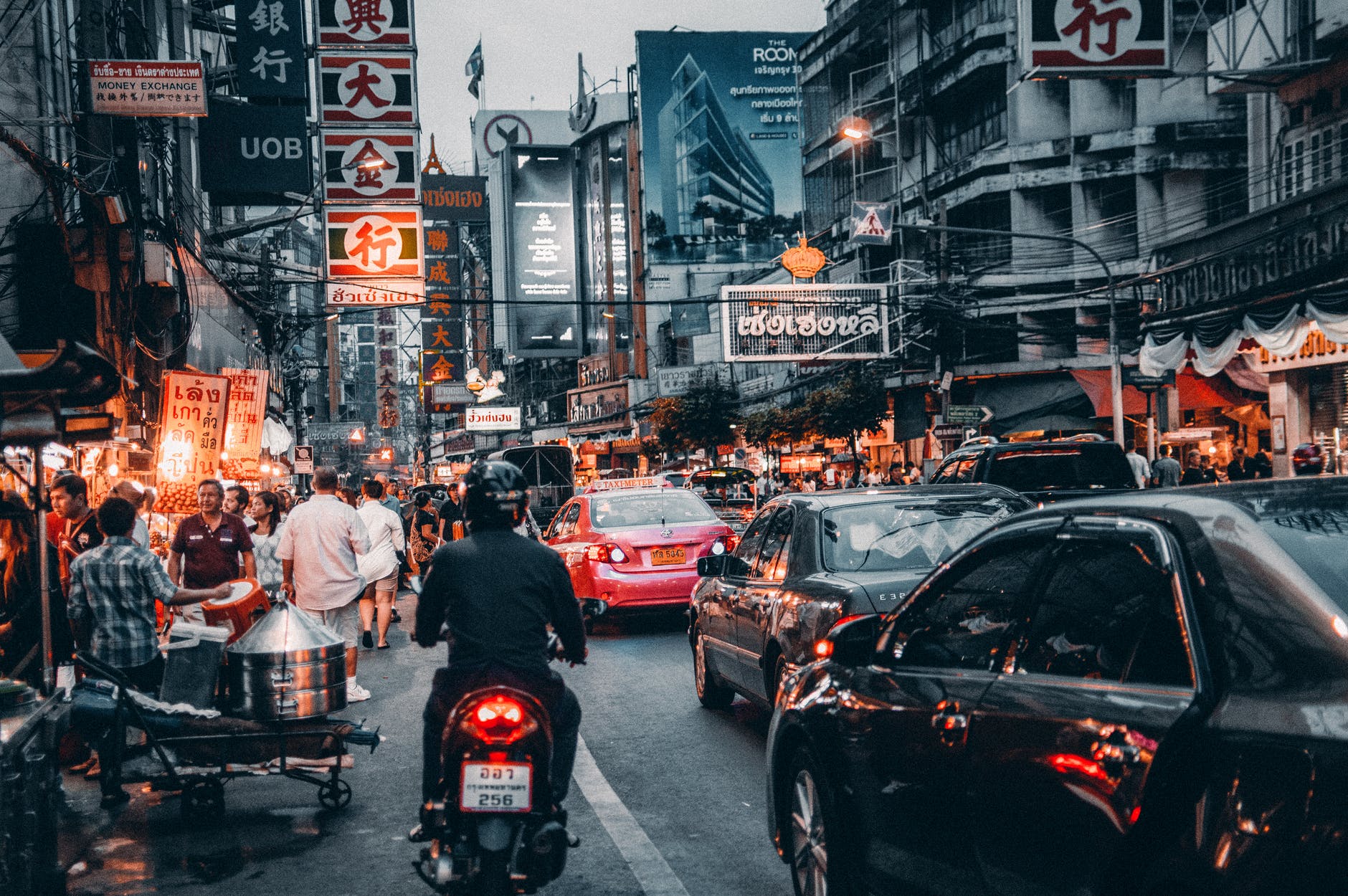
The ongoing drought in Thailand had caused some anxiety about the provision of drinking water in 11 provinces, namely: Chachoengsao, Sisaket, Khon Kaen, Kalasin, Nakhon Phanom, Phatthalung, Lamphun, Chiang Mai, Nakhon Pathom, Ratchaburi and Kanchanaburi.
The severe drought situation is not only affecting Thailand but also plaguing neighbouring countries such as Laos, Vietnam and Cambodia as well.
Downstream along the Mekong River, the Cambodian government had reserved a plot of land in Kambol district’s Boeung Thom commune to construct a clean water treatment facility which has the potential to produce up to 5,000 cubic metres of clean water per day but it would only be ready by early 2023.
In Thailand, the government has announced that they would continue to shore up water provision services in the Eastern Economic Corridor (EEC) and in Special Economic Zones (SEZ) such as Chon Buri, Rayong, Chachoengsao, Songkhla, and Narathiwat, to increase the efficiency of water supply services and support large investment projects in key economic areas of the country.
Recently, the Chinese government also helped to fund a study on the management of cross-border water resource on the Sai-Ruak River, a natural border between Thailand and Myanmar. The study had led to the development of a warning system and a model on water management, as well as recommendations on how to deal with flooding and drought in that area.
In mid-February, water supply experts from the United States suggested that countries in the Lower Mekong should try to reach an agreement to pay China for water releases during times of crisis, such as droughts, at the Stimson Center’s virtual event “Where’s the Water: Mekong Dry Season 2022.”. The idea was met with lukewarm response, citing reasons that stretch beyond the water supply and demand equation.
Now, the King of Thailand has issued an urgent decree for the Thai government to start working on large scale groundwater supply project, as part of the country’s solutions to solve the drought crisis.
Previously, Jirayu Huangsap of the opposition Pheu Thai Party stated that the government favoured politicians through its water projects. The administration refuted the accusations, said that they are working for the public and have already dug around 1,600 wells which would be ready for use in April.
The government declared that they would be able to deliver 70 million cubic meters of water each year, benefiting over 100,000 people and covering more than 160,000,000 square meters of plantation acreage across the country.
In this episode, I shared about the following:
1. Construction of waste-to-energy power plant in Tangerang city in Jakarta; and
2. Australia’s recent controversy with the exporting of “waste” fuel to developing countries.

 Terra Link Research