Free Content: South Korea to begin preliminary work on the country’s roadmap to technology advancement

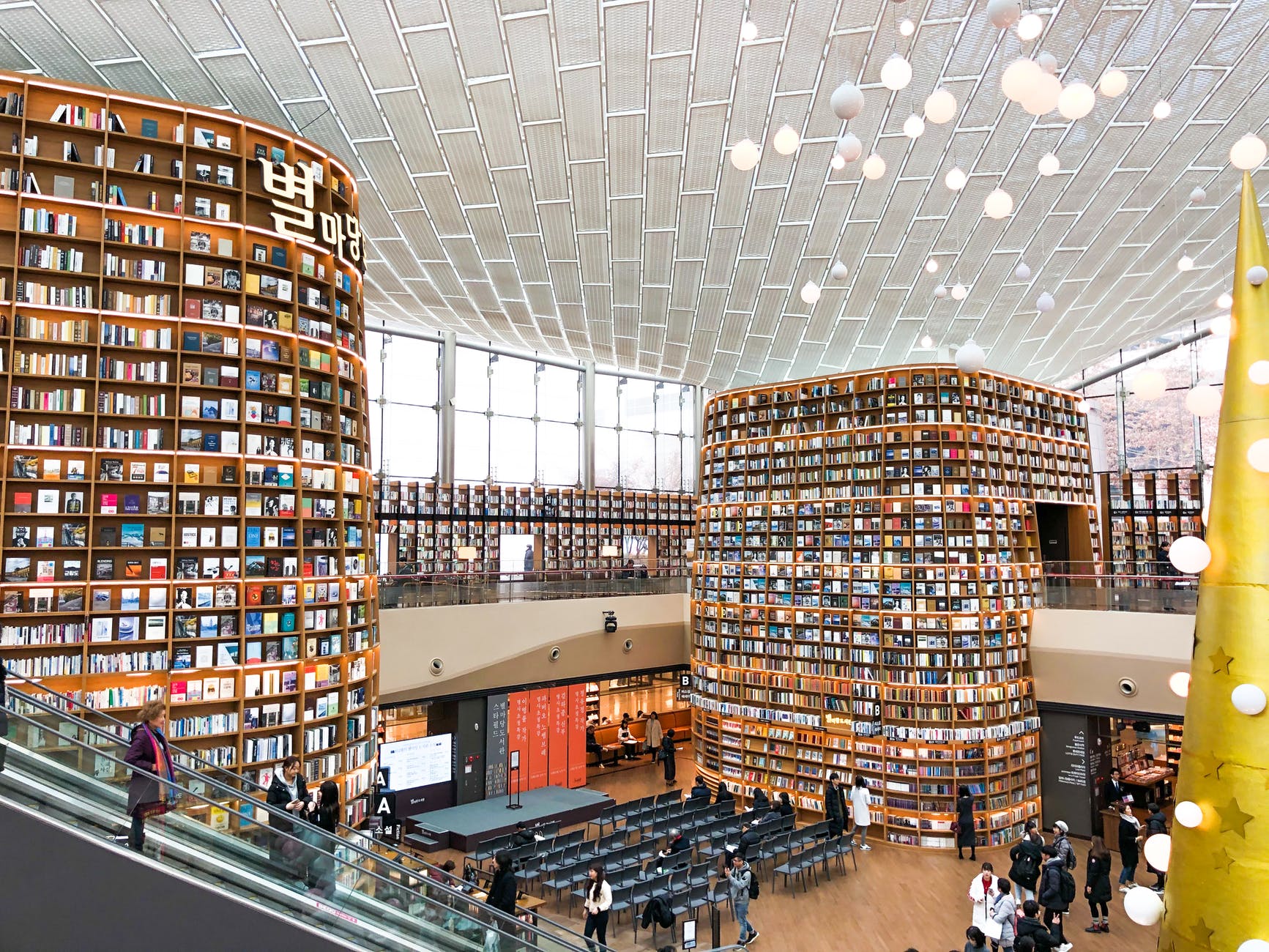
Photo by Markus Winkler

The South Korean government would begin to work, in consultation with the academics, on crafting the implementation strategy to realise the country’s goal of technological advancement.

The country’s top policy makers had earlier decided that development of certain technologies is critical to South Korea’s future competitiveness.

Following this, an intensive study was commissioned, mainly to understand how specific technology could strengthen the country’s supply chain resiliency, national security and create new industries to capture future markets.

The study concluded that the following technologies would play an increasingly important role in the country’s development:

  1. Cybersecurity;
  2. Aerospace;
  3. Quantum technology;
  4. Manufacturing;
  5. Advanced robotics;
  6. Hydrogen;
  7. Secondary battery technology;
  8. Display and semi-conductor;
  9. Advanced biotechnology;
  10. 5G and 6G; and
  11. Artificial intelligence.

Of the identified technologies, a taskforce would further identify additional sub-technologies in each field and develop a roadmap to foster its growth.

On top of this, some universities would be selected to be part of the roadmap, mainly to nurture the necessary manpower and conduct research and development (R&D).

Beyond this, the South Korean government would also, through one of the universities, to extend industrial cooperation with foreign companies like Google, Apple, etc and other overseas research institutions.


Free Content: Thailand to reveal new masterplan to become Bio-Hub of Southeast Asia

Photo by Pixabay

The top policy makers in Thailand wants the country to become the top bio economy of Southeast Asia. The working group would soon announce a new plan to grow sectors like bio-pharmaceuticals, bio-plastics and bio-chemicals, to steer the country towards becoming the Bio Hub for region by 2027.

The draft plan would be divided into different implementation phases. Industrial zones would be set aside in Ban Mi, Lopburi, to pilot an industrial hub project for attracting investments and industry players. The current plan is focus on advance technology and innovations in the area of agricultural products and renewable energy products.

Additionally, the plan would also encourage the new agriculture and biotech industry to synergise with the existing agriculture sector in Ban Mi.

The new plan would be part of the Thailand government’s plan for the country to phase into the Bio-Circular-Green economy and would be jointly considered with their urban masterplan.

The working group is currently working on the details of the plan which they expected to be approved by the Cabinet by March 2022.

La Buena Suerte – Issue 26 Feb: Curating the Latest Trending News in China

La Buena Suerte – A Terra Link Research Production

1. Meituan suffers setback after Chinese government’s announcement

Meituan’s stock price fell by 15% after the Chinese government’s announcement that food delivery companies should reduce current fees and also charge preferential fees to food enterprises in high-risk epidemic zones. The company will continue to transform their business model from food+platform to technology+retail. The company is in the process of applying for the trademark “Meituan eCommerce”.

Source: https://new.qq.com/omn/20220220/20220220A092T900.html

2. Plastic straw market badly impacted by new Chinese government policy

The recent ban in China on the use of plastic straws caused many companies to turn to biodegradable straws as urgent alternative. Cafes like Starbucks weren’t affected as they were early adopters of biodegradable straws, but the same couldn’t be said for many other cafes and plastic straws producers. Money-losing plastic straw producers pivoted to producing paper straws only to be besieged by health concerns due to high level of potassium permanganate.

Source: https://new.qq.com/omn/20220222/20220222A0C98Y00.html

3. China’s three child policy

Academics highlighted the potential implications of China’s recent three child policy. Women in rural places, take more increasing child-rearing responsibility while the men had to travel to other provinces in search of higher salary to support family. Survey showed that these women were concerned about the dynamics of husband-wife relationship as the women were unable to earn a living while the men become the sole-bread winner.

Source: https://new.qq.com/omn/20220223/20220223A00ZJ100.html

4. Are you willing to replace news anchors with a USD15,000 lifelike avatar?

The digital avatar market is growing rapidly in China, and its usage extends far beyond what it could perform inside a metaverse. Digital avatar developers are reportedly charging USD 4,500 to USD15,000 to create digital avatars ranging from comic characters, lifelike people to avatars that can perform the job of a news anchor. The trend is causing mixed feelings among the news anchor community.

5. Leveraging virtual pets to attract more users to Metaverse

The battle to create the best Metaverse is still ongoing in China. Companies are racing to build out their metaverse to replicate the real world as much as they can. Elements such as digital economy, digital currency, digital pop scene, etc. Just like the earlier craze for the toy “Tamagotchi”, companies want to use similar concept to attract even more users into metaverse with digital pets.

Source: https://new.qq.com/omn/20220224/20220224A04S9Q00.html

Podcast – New ESG Report from Responsible Mining Foundation and General ESG Risks in the Mining Sector

Episode Description

In this episode, I shared about the following:

  1. The latest ESG report on 40 mining companies across 250 mining sites by the Responsible Mining Foundation, and also talked about general ESG risks in the mining sector as well. 

Free Content: South Korea to begin experiments on the use of artificial intelligence for groundwater monitoring

Photo by Markus Winkler

There were little concerns about groundwater usage and contamination in South Korea during the early 1990s, but that has changed in recent years.

This is why, in 1993, the South Korean government enacted the Groundwater Act, which mandated the gathering of countrywide groundwater data (usage, water levels, and quality) and the development of groundwater management plans at the national and municipal levels for long-term use.

Increasing population and economic growth have resulted in a comparable increase in the number of buildings, roads, and urban infrastructure, while open space is disappearing.

Aside from that, the number of groundwater wells has increased, resulting in high level of groundwater pumping. South Korean farmers were well-known to tap on private groundwater wells for their water supply because it is free of charge.

Many factors are placing considerable strain on the environment.

The top policy makers in South Korea are aware of the environmental strain and other issues that could pose a threat to their water supply. As such, the South Korean government would work with leading institutions, to conduct joint research on developing technologies for the protection of groundwater, surface water, etc.

The work would focus on harnessing artificial intelligence (AI) as part of a real-time surveillance system for groundwater. The surveillance system should ideally be able to monitor water level, ions, natural and man-made chemicals, and using these arrays of information to manage optimally the groundwater pollutants.

The South Korean government will also draw on the expertise of their nuclear agency to support the establishment of this AI real-time surveillance system for groundwater.

Podcast – Bluescope achieved ResponsibleSteel Certification and Steel Packing in EU

Episode Description

In this episode, I shared about the following:

1. Bluescope achieving ResponsibleSteel Certification and how this trend will affect ESG certifications in the future; and 

2. Using steel in packaging, and recycling and reusing this material therefore reducing offload to landfill. 

Free Content: South Korea pushes for sustainable and smart urban development with artificial intelligence of things

Photo by Philipp Bru00fcgger

The COVID-19 epidemic has caused significant changes in South Korea’s social landscape, the most noteworthy of which are issues such as non-face-to-face and contactless transactions in daily transactions, as well as the growing necessity for enterprises to undertake digital transformation.

Despite the challenges brought about by the pandemic, the top policy makers in South Korea, planning experts in South Korea are of the view that smart cities are not a choice but a necessity. Sustainable and smart cities are one of the solutions to deal with the rapid acceleration of urbanization, which is fast becoming a major global issue.

Top policy makers in South Korea hoped to achieve their country’s vision by underpinning their strategy on the backbone of Artificial Intelligence of Things (AIoT).

When Artificial Intelligence (AI) and the Internet of Things (IOT) come together, the outcome is AIoT, or artificial intelligence of things. Consider internet of things devices such as drones, autonomous vehicles and robots moving freely about the city, with real-time interactions between these devices, and artificial intelligence serving as the the mother-brain that regulating these devices.

There are various practical applications of AIoT in a smart city, including traffic monitoring by drones.

Another area AIoT could benefit is in smart office buildings. Some real estate owners have already decided to put up a network of smart environmental sensors in their office building.

These sensors can determine the number of people within the building and adjust the ambient temperatures and luminsity of lights to maximise energy savings. In another case, a smart building could also utilise biometric technology to control building entry.

AIoT could also be used to maximise the usage of urban resources. AIoT may identify accidents, unlawful parking, and adjust traffic signals to aid ambulances in getting to people who require assistance as quickly as possible.

The South Korean government would explore the applocation of AIoT in the following areas:

  1. Entertainment
  2. Energy
  3. Logistics
  4. Digital healthcare
  5. Agroforestry fishing industry
  6. Disaster safety; and
  7. Smart homes

Apart from this, they would also try to encourage more private enterprises to take part in growing this segment of sustainable and smart urban development.

Podcast – RWE ventures into India for Offshore Wind, Greenwashing by top companies & EU farming ministers calls for higher food safety standards

Episode Description

In this episode, I shared about the following:

1. RWE partners Tata Power to build Offshore Wind in India; 

2. Greenwashing by top companies in the world; and 

3. Farming ministers in EU calls for integration of higher food safety standards in the Codex Alimentarius Commission. 

Free Content: Indonesia pilots project to turn waste to energy

Photo by Tom Fisk

According to government estimates, Indonesia ranked as the third largest producer of plastic waste in the world in 2020, and the government hopes to progressively convert growing waste into an opportunity to provide electricity to its cities.

A working group was formed to study the challenge and they discovered that the country was producing at the rate of almost 70 million tonnes of plastic waste every day. The rate of waste production has already exceeded what the waste shelters could contain, and the public agencies are facing difficulties in building new waste shelters.

Apart from the recent pilot project with the local government of Daerah Khusus Ibukota, to convert waste to energy, the central governments also hoped to foster even more similar collaborations with private sector players. The pilot project was able to convert 100 tonnes of waste to 700 kW of electricity

The Indonesian government hoped to use the results from the pilot project to inform future designs and scale it across more locations.

Design a site like this with WordPress.com
Get started