La Buena Suerte – A Terra Link Research Production
1. Xiaomi and Oppo still unable to face off directly with Apple
Huawei’s ranking in global shipping has dropped substantially since their problems in accessing 5G chips in 2020. At the moment, even other brands like Xiaomi, OPPO and other similar manufacturers still do not have sufficient “firepower” for a direct face off with Apple, for the time being.
SHEIN is leading because of their expertise in the “Test and Repeat” business model, previously used by Zara and H&M. 6 percent of SHEIN’s inventory lasts more than 90 days. SHEIN launched a partnership with Farah Al Hyda, an influencer with 5.6 million followers
Recent rumors has it that TMall will be changing their corporate name from “Tian Mao” to “Mao Shou”. A spokesperson from TMalll has assured all that they would not be changing their name, and that “Mao Shou” is a recent experiment being tested by the digital business unit to improve customer experience.
After annoucement of its corporate results, Roblox said that they will intensify their efforts in gamification of education. They want to work on attracting more users to their Roblox Metaverse and transform creativity training and education through their games.
5. Ultrasonic Electronics expanding to cater to 5G market
Ultrasonic Electronics expanding capacity to target the 5G communication network equipment industry and cater to the production of cutting-edge products such as 5G enabled smart phones and automotive electronics.
The world economy is still grappling with the persistent shortage of computer chips that enable many of our essential technologies. The issue has been growing steadily since the beginning of the Covid-19 pandemic and shows no signs of weakening.
The shortages were primarily caused by the closure of major Asian chip factories and this scenario could be expected to continue, despite the semiconductor’s effort to catch up with market demand.
Top policy makers Thailand believed that if the country could produce wafers locally, they would be able to pull ahead of other countries and reap the benefits from value-adding and growing the local semiconductor ecosystem.
Subscribe to get access
Read more of this content when you subscribe today.
The South Korean government is supporting waste-to-energy policies in order to lower the cost of waste disposal through incineration and landfills, create power, fuel, and heating, and use manure, livestock manure, sewage, food garbage and other wastes in the conversion to energy.
Subscribe to get access
Read more of this content when you subscribe today.
Despite Indonesia’s enormous potential for harnessing renewable energy and transitioning to a circular economy, employment in the industry continues to face a number of obstacles.
Analysts highlighted that the country currently lacks the technical manpower resources for occupations in the clean, green and renewable sectors, even though investments continue to pour in.
An employment gap caused by a high demand for technical manpower and a scarcity of ready talent, may prove to be a stumbling hurdle for many significant renewable infrastructure projects in the future.
This is owing to a lack of relevant education and training in the technical skills required to pursue a long-term professional path in the sustainability sector.
Against this backdrop, Indonesia would be cooperating with Switzerland to pilot technical educational institutions to prepare the locals for a career in the sustainability sector.
The Swiss government will work with private sector partners such as Schneider Electric Indonesia, Xurya Daya Indonesia, etc, to develop educational curriculum in the areas of installation, operation and maintenance of renewable energy devices such as solar Photovoltaics panels.
PT Xurya Daya Indonesia (Xurya), is a renewable energy firm focusing on rooftop solar power plant leasing in Indonesia, and has recently obtained USD 21.5 million in funding.
This series A fundraising round was headed by a venture capital company, East Ventures (Growth fund), and PT Saratoga Investama Sedaya Tbk, with current investors like Schneider Electric and New Energy Nexus Indonesia.
The funds would be used to build rooftop solar power plant in Indonesia, as well as to help the firm achieve its long-term goal of being a leader in delivering technology and solutions for clean and sustainable energy.
Before the educational curriculum begins, a batch of trainers will be identified to undergo a carefully structured “train-the-trainers” programme that will be conducted over two weeks.
The trainers could be expected to learn rooftop solar panel installations, solar energy engineering competency test and advanced skills on solar power generation technology.
Once the training is completed, the first batch of students could be expected to begin enrolment to the technical schools by the mid of 2022.
Other areas of academic curriculum would later include planning, design, building and installation, inspection and commissioning, supervision, operation, and maintenance of solar power plants, diesel solar hybrid power plants, and hydroelectric power plants.
The top policymakers believed that the pilot training programmes could be scaled up and repeated throughout Indonesia, eventually contributing to Indonesia’s energy transformation goals.
In response to the country’s rising waste problems, the Thai government would mobilise its government agencies to address the country’s waste management issues; first by raising awareness of proper waste disposal practices in all industrial sectors, secondly, sharing environmental best practices to educate private practitioners and motivate them towards higher environmental standards and lastly, promote the use of renewable energy.
Subscribe to get access
Read more of this content when you subscribe today.
The drought in Cambodia has prompted the government issue an advisory to its citizens to use water carefully, particularly in rural areas, stating that rainfall from the previous rainy season “would not be adequate to fulfil the immediate demands,” and another study also stated that irrigation water capacity is just 20 percent full.
Cambodia is approaching its fourth year of drought, with climate change and continuous dam development wreaking havoc on the Mekong River and the 65 million people who rely on it for a living.
Water management issues in Cambodia is very challenging because the Kingdom is heavily reliant on fresh water (from the Mekong River and Tonlé Sap Lake) rather than seawater.
And because of climate change as well as increased water demand from the population and growing industrial segment, these water supplies from Mekong River and Tonlé Sap Lake are becoming stressed.
The tropical environment of Cambodia is another set of issue that is unique to the country. On top of that, neighbouring nations from which Cambodia imports part of its water, is causing some challenges owing to the ongoing drought, which are becoming more unpredictable as a result of climate change.
To this, the Cambodian government has been collaborating with other countries to improve water management techniques. Just last month, the government held talks with Japan about different sorts of assistance for the Kingdom’s socioeconomic development, with a particular emphasis on concrete infrastructure, health and healthcare, education, good governance, and, in particular, water resource planning and management.
This week, the South Korean government, together with UNESCO, will be conducting a capability development workshop in the area of water management for a team of 20 specially selected Cambodian government officials.
The capability development workshop will start off an entire programme that the South Korean government has allocated USD 200,000 for. The programme comprises two phases: capability development for Cambodian officials and experts, and support to establish the guidelines for Cambodian water information research and analysis.
The workshop will be completed by the end of this week.
The Vietnamese government planned to adopt a three-pronged strategy over the next three years, to encourage more of the country’s private firms to take on business challenges in the Environmental and Social Responsibility sector.
The fast expansion and industrialization of Vietnam have had a severe influence on the environment and natural resources.
According to the World Bank, Vietnam has emerged as the world’s fastest rising per-capita greenhouse gas emitter since the beginning of its market revolution, expanding at a rate of roughly 5% per year over the last 20 years.
Water demand continues to rise, while water production remains low, at around 12% of worldwide standards.
Unsustainable use of natural assets such as sand, fisheries, and wood may have a detrimental impact on long-term economic prospects.
On the upside, this present significant commercial opportunities for private enterprises that are willing to venture into the environmental and social responsibility sector.
A working group would coordinate the strategy’s activities in order to promote awareness among private firms, local governments, central agencies, and ministries.
The top policymakers recognised the complexities of the task at hand and agreed to work together with the private sector to create sector-related employment, improve living circumstances for low-income and vulnerable people, safeguard the environment, and help as many as possible to adapt to climate change in Vietnam.
While worldwide awareness of Environmental, Social and Governance (ESG) issues have grown significantly in the past few months, its influence on businesses and regulators in Vietnam is still limited.
Which is why the Vietnamese government has decided to support up to 10,000 private enterprises to embark on this journey, cited potential benefits like improving energy savings and increasing labour producviity amongst others.
Still, transparency of ESG performance by state-owned enterprises is a major concern. Furthermore, while ESG rules may be applied to private investments, institutional investors can do more to push public businesses to publish their ESG performance.
Vietnam’s three-pronged approach would involve the following steps:
1) Creating a long-term business support ecosystem. Encouraging more private enterprises to take up business challenges in the environmental and social responsibility domains through social media and social networks.
2) Supporting these businesses through technology support, subsidies of rental and digital transformation tools, investment capital raising, trade promotion, communication support, training and consultancy services.
3) Proper management of the promotion programme through annual evaluation and reporting to the central government. Adjustments to the programme could be made to ensure relevancy.
The three-pronged strategy would be funded through contributions and grants by individuals, private enterprises and government budget.
Vietnam, like many other countries, is vulnerable to issues of sustainability. Taking on these problems would require extensive technical expertise and human resources, as well as financial assistance, political will, improved collaboration and information exchange with the international community.
Indonesia has committed to meeting the Paris Agreement’s Net Zero Emission objectives, and a large portion of the roadmap relied on utilising more renewable energy.
The top policymakers are unanimous in their belief that the renewable energy journey must be carefully balanced with issues related to Environment, Social, and Governance (ESG) topics, and that the industrial and transportation sectors are among the top contributors to carbon emissions in the country.
The central government would work with the local governments, to attract more people to STEM education and retain them in careers that could contribute to development of energy technology thereby advancing the country to the next frontier.
The emphasis on energy technology for the country in the next few decades, would be in the areas of hydrogen technology, fuel cell, bio-fuel, nuclear power and geothermal energy.
Subscribe to get access
Read more of this content when you subscribe today.
By 2025, the South Korean government hoped to have up to around 2.8 million electric vehicles (EV) on the road. This most likely would involve the replacement of public transport vehicles such as rental vehicles.
To achieve this, South Korea will need to enhance its charging infrastructure to guarantee that everyone can use their EVs properly. Buildings, both new and old, will soon have to install EV chargers. The government’s objective was to have at least five charging stations to every ten EVs across the entire country.
More than 100 high-speed chargers will be installed at suitable locations so that EV drivers can travel at least 300 kilometres after charging for 20 minutes. For perspective, the driving distance from Seoul to Busan is approximately 325 kilometers.
With this charging station infrastructure plan, the government hoped to provide sufficient charging stations for South Korean EV owners.
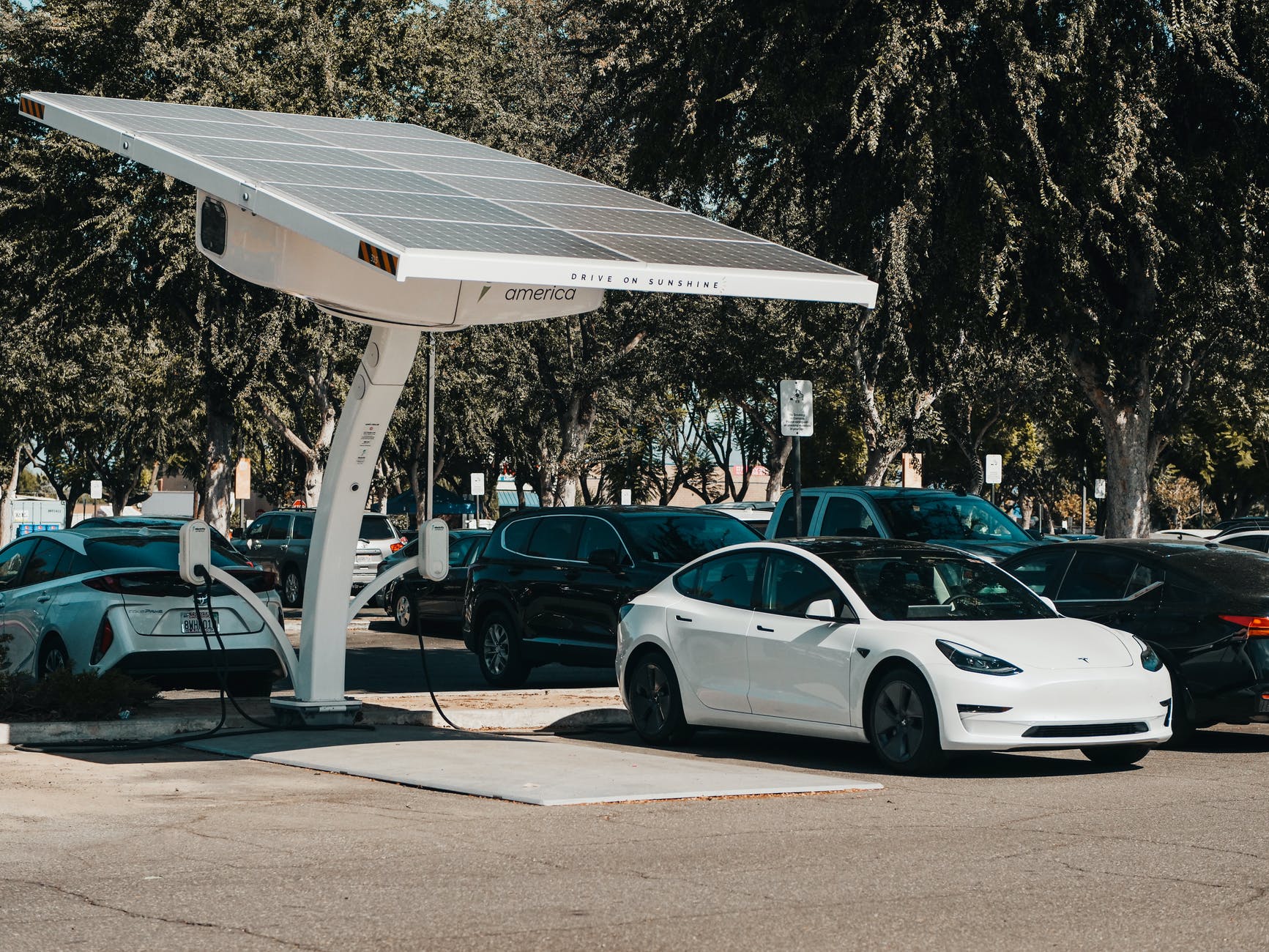
Apart from that, South Korea intended to launch the country’s first car supercharging station that is able to harvest renewable energy from solar panels while charging two EVs at the same time.
The new supercharging station, built on top of an existing gas station facility, operates with 300 kW of fuel cell and 20 kW of solar power, and discharge with 350 kW and 200 kW electric chargers.
Now, EVs can use a variety of charging stations. Level 1 electric chargers are the cheapest of all charging stations today, but they also take the longest to charge EV’s battery. EV owners usually use this type of charger to charge their vehicles overnight.
Level 2 EV chargers can also be used together with solar panels. These chargers provide a range of 15 to 100 kilometres per hour of charging. Level 2 EV chargers can charge a car battery in less than 2 hours.
Level 3 EV chargers, commonly known as DC Fast Chargers with CCS2 or CHAdeMO connections, provide 100+ kilometres of range for EVs in as little as 30-40 minutes of charging.
The new car supercharging station was performing at Level 3 efficiency and the South Korean government intended to scale this model across the country. This initiative was conceived through the sandbox collaboration model promoted by the South Korea government for its private sector.
The top policy makers hoped that the successful launch would proliferate more innovations to improve the country’s charging station network.



 Terra Link Research