Indonesia prepares to accelerate the implementation of phase two of their national roadmap, to increase the number of electric motor vehicles in the country. The central administration would achieve this by scaling its pilot electric motor conversion programme through the involvement of more government agencies.
Subscribe to get access
Read more of this content when you subscribe today.
The G20 Infrastructure Working Group meeting took place from January 20 to 21, with the theme, “Recover Together, Recover Stronger” under the Presidency of Indonesia. The agenda was to discuss about the recovery of the world economy after COVID-19 through the development of quality infrastructure.
The working meetings covered the following six topics: 1) Private sector participation in sustainable infrastructure investment (first day); 2) Social inclusion and sub-national disparities (first day); 3) InfraTech (first day); 4) Transformative infrastructure (second day); 5) Governance (second day); and 6) Quality Infrastructure Investment indicators (second day).
The working meetings were split into four main sessions, starting with a presentation by the secretariat of the Sustainable Finance Working Group.
The Global Infrastructure Hub highlighted the state of sustainable infrastructure investment and private sector engagement in the second session, which explored investment patterns and concerns linked to private sector participation in sustainable infrastructure investment.
The third session, delivered by EDHEC, GRESB, FAST-Infra, Coalition for Climate Resilient Infrastructure, and ICP, focused on “Private sector engagement in scaling up sustainable infrastructure investment, especially through Environmental, Social, and Governance (ESG) standards.”
Meridiam, I-Squared, SMBC, and the China-Africa Development Fund provided private investor perspectives on the gap in scaling up sustainable infrastructure investing at the fourth session.
Challenges discussed included fragmentations within the investment community, incentives, etc. Other issues included challenges stemming from resource requirements for building renewable energy facilities and financing.
This session invited a broader discussion on what the government can do to increase enthusiasm for ESG investing and what influence may be generated at the G20 level.
The seminar’s last session focused on nations’ perspectives on sustainable infrastructure investment and private sector engagement, and it finished with a Q&A session among IWG members.
The IWG co-chairs from Australia and Brazil moderated the discussion, analysed the topics, and identified future actions and concerns for the Indonesian Presidency’s First Finance Ministers and Central Bank Governors Meeting, which would be held in Jakarta next month.
The Japanese top policy makers have recently expressed their intent to diversify away from traditional fuel sources, which they hoped to achieve by making breakthroughs in fuel manufacturing technology.
The working group has put together a roadmap to guide its private sector in their research and development (R&D) journey, with key milestones to steer the country towards energy independence by 2040.
The carefully designed roadmap laid out very specific milestones in technology development, product development and commercialisation.
Subscribe to get access
Read more of this content when you subscribe today.
In an attempt to consolidate the country’s effort to push for greater relevancy with the future global market, the South Korean government would be strengthening cooperation between the government and its private sector, in ten specially identified technologies that were deemed to be strategically important to the country in the future.
For this, the South Korean government would be facilitating more collaborations and exchange of critical information between its public and private sectors. This, so that the administration would be able to analyse, strategise and develop relevant policies to support workforce demands and future commercial decisions.
The country’s top policy makers have planned to include more experts in its research and development consultation committee, with the intent to obtain greater clarity into the identified technologies.
By facilitating more investment and effort into this pool of technology, the Korean government aspired to position the country as one of the leaders in technological innovation and develop its unique global branding of K-Tech.
The government administration has identified a range of strategic technologies which included 5G/ 6G, artificial intelligence, cybersecurity, bio-hydrogen, advanced robotic manufacturing, metaverse and others.
This move is also in line with the South Korea government’s earlier long-term road map to foster its metaverse industry, with the aim of becoming the world’s fifth-largest market in the next five years.
Under the metaverse roadmap plan, South Korea would foster at least 220 metaverse companies with sales volumes of more than 5 billion won ($4.2 million) and create a “metaverse academy” in 2022, to nurture 40,000 local experts by 2026.
Indonesia will soon release their roadmap for energy transition and carbon neutrality, with a number of key strategies. The first step would be the implementation of carbon trading and carbon tax with a cap and trade and tax scheme, starting from 1st April 2022.
The cap and trade and tax policy would apply to coal power stations with capacities ranging from 25 MW to 100 MW, and it would go into effect in 2023.
After this, the top policy makers would operationalise the following milestones over the next 8 years.
Subscribe to get access
Read more of this content when you subscribe today.
The Malaysian government in collaboration with Global Tiger Forum, will organise the 4th Asia Ministerial Conference on Tiger Conservation 2022 in Kuala Lumpur, Malaysia. The event will have representatives from 13 countries in the Asia Pacific region
The 13 countries, known collectively as the Tiger Range Countries (TRC), are countries where tigers still roam free in the wild. The countries include Bangladesh, Bhutan, Cambodia, China, India, Indonesia, Laos, Malaysia, Myanmar, Nepal, Russia, Thailand and Vietnam.
The United Kingdom is the only Non-TRC country that is willing to support and/or participate in the tiger conservation programs.
The event is a platform whereby representatives from the 13 TRC would share on the current status, successes and challenges that they faced in protection of tigers. It is expected for the majority of these countries to resurface the need to adopt a landscape approach to tiger conservation as well as strengthening transboundary collaboration and enforcing stricter penalties against poaching and illegal wildlife trade.
In the past, several of the TRC countries also highlighted the importance of protecting and managing prey species. The forum would also be expected to tackle the recurring challenge of securing long-term finances, by encouraging the growing body of sustainable businesses to support the ongoing tiger protection and restoration efforts.
Infrastructure and rail developers would also be invited to share mitigation strategies that address the adverse impacts of linear infrastructures (such as railways, highways, etc.) on wildlife populations and habitats. Other topics would include joint efforts in capability development and knowledge sharing in satellite systems, smart monitoring capabilities and policing methods.
The resolution from this 4th Asia Ministerial Conference on Tiger Conservation will set the regional action plan to guide the 13 TRC on tiger conservation and economic development for the next cycle.
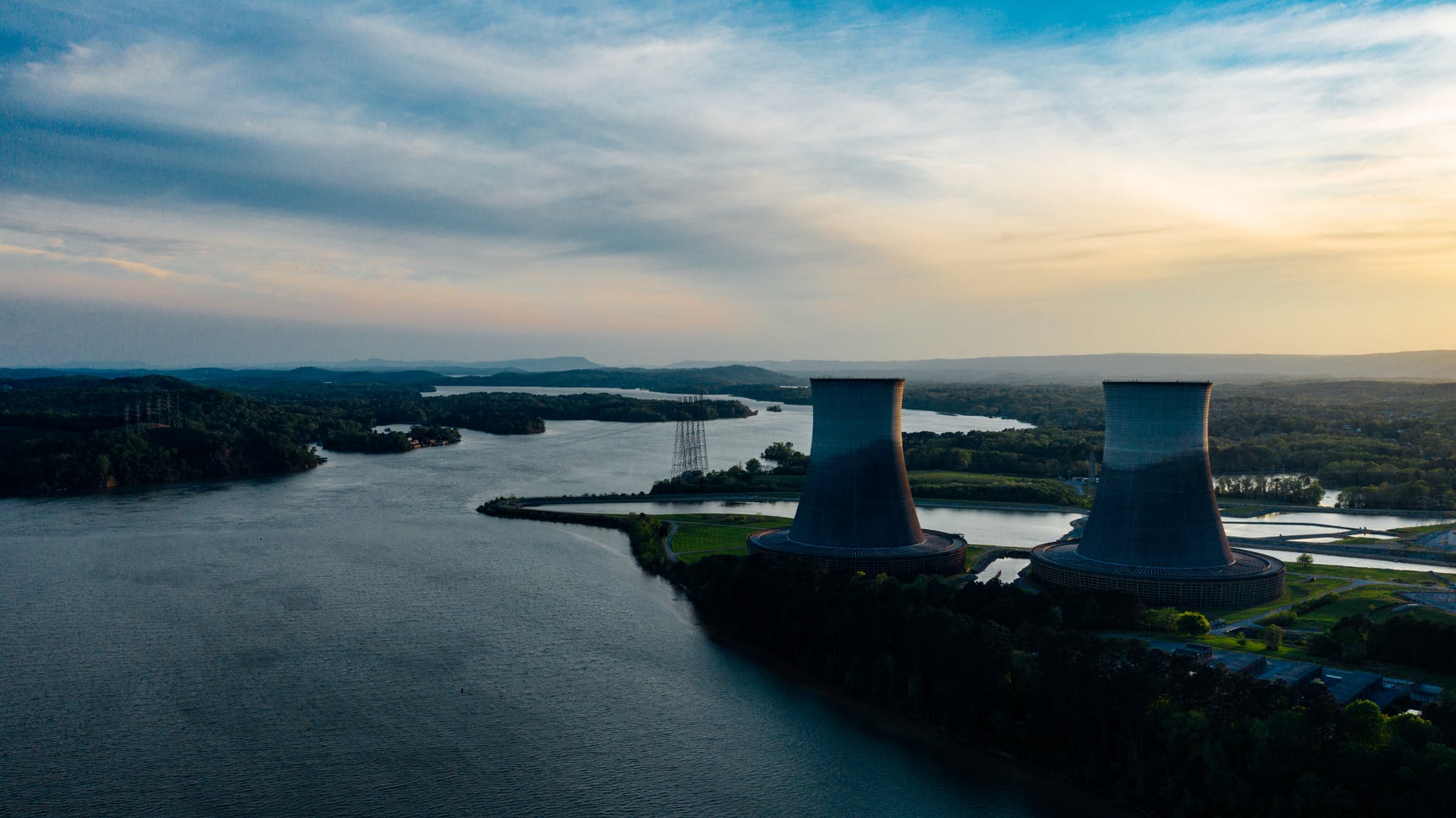
In a recent event organised by China’s nuclear state-owned enterprise (SOE), representatives from Indonesia shared in detail about their development plans for nuclear facilities.
Subscribe to get access
Read more of this content when you subscribe today.
The Vietnam government has laid out 2022 key plans for the telecommunication and information technology (IT) sectors and hoped that the new initiatives will prepare the country to capture the upcoming opportunities in the future of work.
The administration aimed for the telecommunication sector to improve its labour productivity by 30% and they hoped to achieve this through the strong growth in cloud computing and digital platforms.
Cloud computing and digital platforms in Vietnam are currently experiencing annual growth rates of around 17% while the telecommunication sector is growing by about 1.5%. Based on estimates, the size of the cloud computing and digital platforms markets will be equivalent to that of the telecommunication sector by 2025.
The top policy makers encouraged the private sector to pay attention to solving issues related to scams and frauds so that the operators could prepare their platforms for digital payment infrastructures in the future. Operators were encouraged to invest in cybersecurity, artificial intelligence and data analytics capabilities so that the law enforcement agencies are able to track violations.
In parallel with the country’s research into 6G technology, the plan is for the sector to complete allocation of the 4G and 5G frequencies and also to construct the infrastructures that are necessary for complete 5G network coverage. In addition, the administration has informed the sector to procure equipment and research from local enterprises instead of foreign suppliers.
The Vietnam government wanted the telecommunication sector to grow by double digits by 2025 and would try their best to lead the movement by facilitating international cooperation, charting new areas for research and setting out plans to develop the necessary infrastructures for each municipality.
In the upcoming months, Thailand and Japan would establish a working platform to create a framework to promote the development of science, technology and innovation for economic growth in both countries. The administrations from both countries would base their implementations by referencing the respective countries’ strategies for their green economy.
Subscribe to get access
Read more of this content when you subscribe today.
The Korean government is looking forward to fostering closer collaboration with its municipalities and relevant institutions, in preserving and restoring endangered wildlife.
The top policy makers believed that the working relationships among the central government, municipalities and relevant institutions could be further strengthened by creating stronger linkages to various restoration and conservation projects, through a set of common working standards.
The central government hoped to create a collaborative environment by enabling the sharing of best practices among the practitioners, which might help to improve the success rate in conservation and restoration efforts.
Moving forward, the central government would work on guidance in project management techniques which would cover aspects of preparation, planning, implementation, evaluation, reporting and sharing of best practices.
The central government expected that in the upcoming months, there would be skills gaps among the institutions, therefore, is encouraging the practitioners to reach out for skills upgrading and training.








 Terra Link Research