
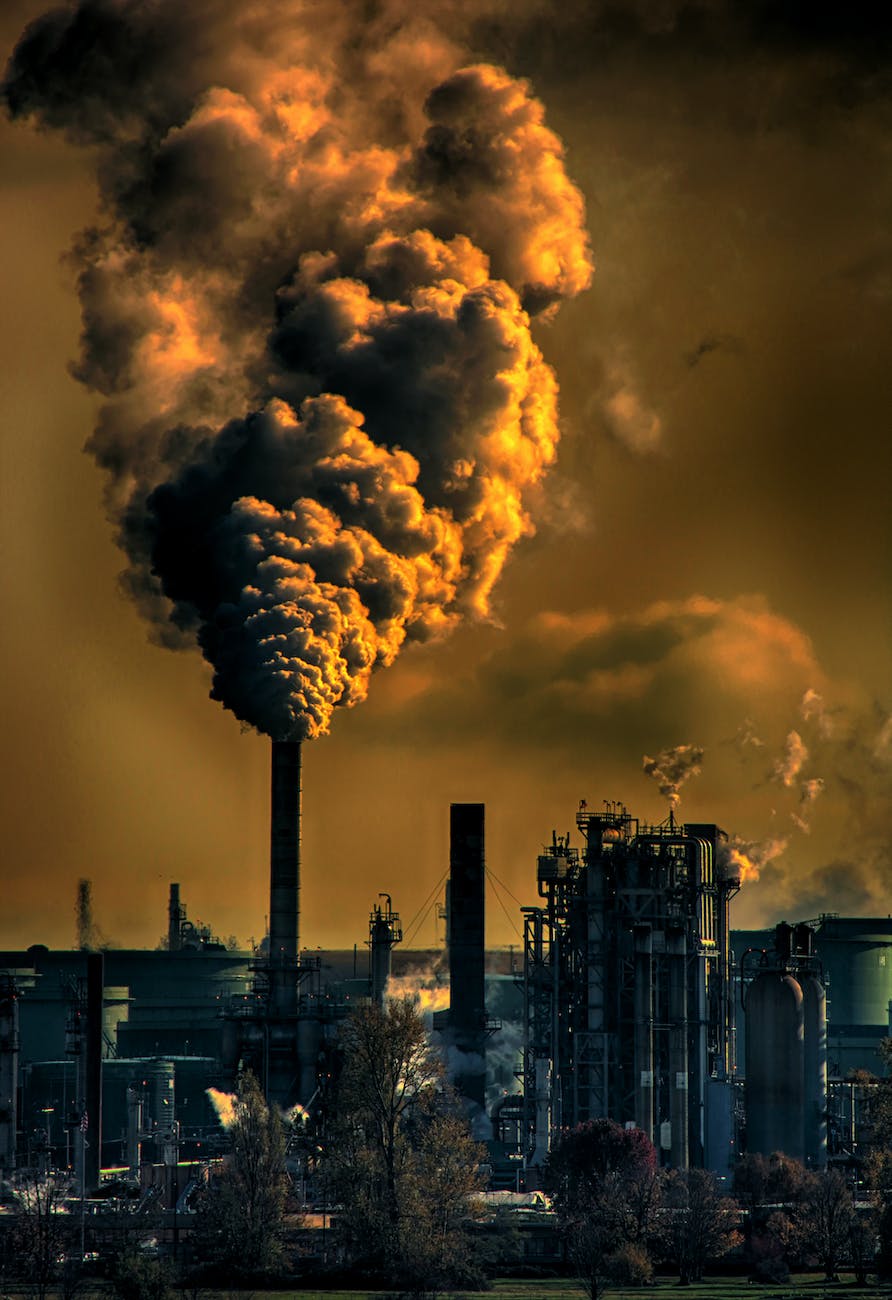
Scientists have found that greenhouse gas emissions are at an all-time high, causing an unprecedented rate of global warming. The human-induced warming, mainly caused by the burning of fossil fuels, has led to an average rise of 1.14°C for the latest decade (2013-2022) above pre-industrial levels, up from 1.07°C between 2010 and 2019. The evidenceContinue reading “The Alarming Rise in Greenhouse Gas Emissions and Global Warming”
Category Archives: Climate Change
Air Quality Stations Could Be the Solution to Tracking Global Biodiversity
The loss of biodiversity and species extinction is a growing concern worldwide, but quantifying those losses at a large scale has been a difficult task. However, recent research suggests that air quality stations could provide a game-changing solution. Unbeknownst to many, these stations have been quietly collecting vast amounts of environmental DNA (eDNA) for decades,Continue reading “Air Quality Stations Could Be the Solution to Tracking Global Biodiversity”
Revolutionizing the Estimation of Coastal Fish Stocks: A.I. Joins the Ranks

In recent years, there has been a growing concern over the depletion of marine life due to overfishing. While many scientists have worked tirelessly to estimate coastal fish stocks, it is often a complicated and time-consuming process . However, with the help of newly developed artificial intelligence (AI) algorithms, researchers are now able to estimateContinue reading “Revolutionizing the Estimation of Coastal Fish Stocks: A.I. Joins the Ranks”
Revolutionizing the Hydrogen Renewable Energy Industry with a New Supply Chain Model

The future of a sustainable energy economy relies on a shift towards renewable energy sources to power our daily needs. Hydrogen is an excellent alternative to fossil fuels, given its high energy content and zero carbon emissions when produced using renewable sources. However, transitioning to this new hydrogen economy requires an efficient and reliable supplyContinue reading “Revolutionizing the Hydrogen Renewable Energy Industry with a New Supply Chain Model”
New Catalyst Lowers Cost for Producing Environmentally Sustainable Hydrogen from Water
Researchers around the world are looking for ways to produce hydrogen in a way that is sustainable, cost-effective, and does not emit greenhouse gases. And now, a team of scientists has developed a new catalyst that could make low-cost and energy-efficient production of hydrogen possible. One promising solution is cobalt, a new catalyst composed ofContinue reading “New Catalyst Lowers Cost for Producing Environmentally Sustainable Hydrogen from Water”
Rocks: The Next Generation of Solar Energy Collectors
As demand for clean and sustainable energy continues to rise, researchers have been exploring various approaches to harness solar power. One such approach is concentrated solar power, which involves collecting and storing solar heat to create electricity or dry foods. And now, the next generation of solar energy collectors could be rocks. Recent research hasContinue reading “Rocks: The Next Generation of Solar Energy Collectors”
A Use Case for Coal – Storage for Hydrogen
As we strive to reduce the world’s carbon footprint, scientists have been working diligently to develop hydrogen as a clean energy source that could curb our dependence on fossil fuels. However, a major hurdle in the widespread adoption of hydrogen fuel cells has been its storage for future use. This is where an unexpected solutionContinue reading “A Use Case for Coal – Storage for Hydrogen”
Harvesting Clean Energy from Thin Air: The Revolutionary Air-gen Effect
Engineers have been tirelessly searching for ways to harness clean energy and reduce our reliance on fossil fuels. The answer to this problem may be found in the most unlikely of places – thin air. A team of researchers have recently discovered a revolutionary technique that allows for the continuous harvesting of electricity from humidityContinue reading “Harvesting Clean Energy from Thin Air: The Revolutionary Air-gen Effect”
World’s Farms to Halve by 2100: Risks to Global Food Systems
New research has revealed that the number of farms globally will reduce significantly from 616 million in 2020 to an estimated 272 million in 2100. This poses a significant risk to the world’s food systems, which are already under considerable strain. With the population of the world expected to increase to 11 billion by 2100,Continue reading “World’s Farms to Halve by 2100: Risks to Global Food Systems”
The Rising Temperature in North-West Europe: Urgent Need for Action
A recent study on the temperature trends in North-West Europe shows that the maximum temperature of extremely hot days is increasing at an alarming rate. The study analyzed data of near-surface air temperatures recorded over the past 60 years and found that the hottest days are warming twice as fast as the average summer days.Continue reading “The Rising Temperature in North-West Europe: Urgent Need for Action”
 Terra Link Research