
The Indonesia government plans to reduce GHG emissions by 29 percent by 2030 and that should work out to about 834 million tonnes of CO2. It is quite a stretch target and the government would have to develop a rigorous Greenhouse Gases (GHG) reduction and energy transformation plan and keep a tight rein on their yearly targets in order to achieve their goals.
Why is it a challenging target?
Let me work it out so that you could have a clearer picture of what’s going on and appreciate the situation better. Using the calculations provided by the EPA for rough estimations:
8.89 × 10⁻³ metric tons CO2/gallon gasoline × 11,484 VMT car/truck average × 1/22.3 miles per gallon car/truck average × 1 CO2, CH4, and N2O/0.989 CO2 = 4.63 metric tons CO2E/vehicle /year
Converting it to tons would yield the result of about 4.19941 tons CO2E/vehicle /year
CO2 emission from a vehicle per year
For anyone to appreciate how enormous this task is, I will give you the following figure: in order to achieve a reduction of 834 million tonnes of CO2 by 2030, the Indonesian government would have to reduce the number of vehicles by almost 19.56 million vehicles per year.
Reducing 19.56 million vehicles per year is equivalent to stripping all passenger vehicles from the entire Australia. To reach their sustainability goal, the Indonesia government would have to strip 10 X Australia of their passenger vehicles.
I have to point out that this is not the strategy adopted by the Indonesia government. That’s just some figures for appreciation. Of course, they are banking on using a replacement strategy to achieve approximately 38% of their committed targets and the breakdown is approximately as follow:
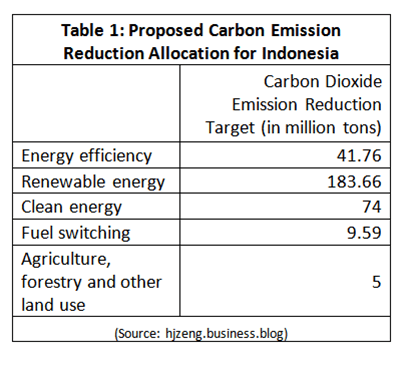
A quick look reveals that the strategies with the most impact are (1) Renewable energy, (2) Clean energy and (3) Energy efficiency.
Renewable energy and clean energy are interesting topics.
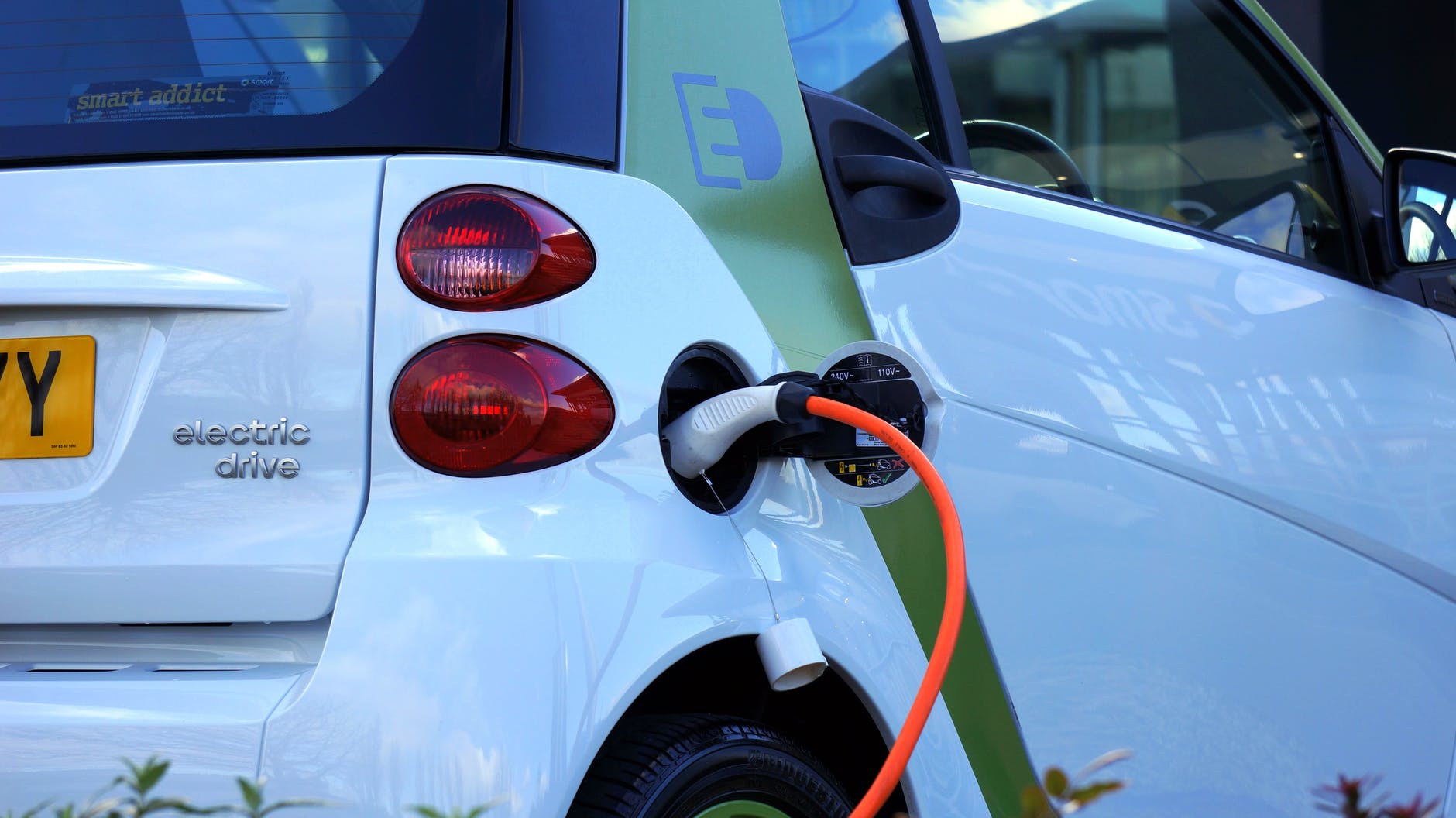
What are renewable energy and clean energy?
Renewable energy is energy that is generated from natural processes that are continuously replenished. This includes sunlight, geothermal heat, wind, tides, water, and various forms of biomass. This energy cannot be exhausted and is constantly renewed.
It is important to note that the terms renewable energy and clean energy are not interchangeable. Not all renewable energy methods are clean energy. For example, geothermal power is renewable energy source but some of the ways it can be processed can have a negative impact on the environment. The benefits of clean energy are that it reduces our reliance on fossil fuels and can mitigate climate change.
What other ideas the Indonesia government should bank on, to reduce GHG emissions by 29 percent by 2030?

The only productivity tool you’ll ever need!
Don’t you wish you could IMPROVE PRODUCTIVITY and INCREASE COLLABORATION among your staff while doing away with all the hassle? After trying out so many productivity and office tools, I discovered that Google Workspace is the BEST TOOL for both remote and on-site working!

Apart from using the Google Workspace, I want to provide you with even more EXCITING VALUE for your company’s GROWTH and EXPANSION. Today, I am giving out two promotional codes that you could apply and start SAVING MORE MONEY!
| Plans | Promotional Codes |
|---|---|
| Google Workspace Business Starter Plan | EAAY74Q979XD49K |
| Google Workspace Business Standard Plan | YATVPVG39EFFFGW |
Click here to start GROWING NOW!

